Metal Definition
mĕtl
metaled, metal, metalled, metalling, metals
noun
metals
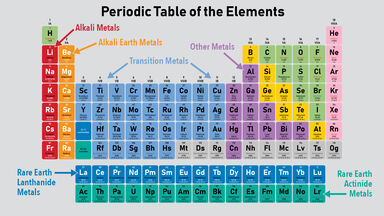
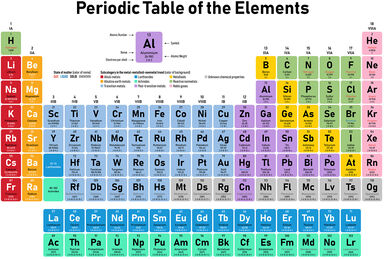
Any of a class of chemical elements, as iron, gold, or aluminum, generally characterized by ductility, malleability, luster, and conductivity of heat and electricity: these elements act as cations in chemical reactions, form bases with the hydroxyl radical, and can replace the hydrogen of an acid to form a salt.
Webster's New World
An object made of metal.
American Heritage
An alloy of such elements, as brass or bronze.
Webster's New World
Any substance or thing consisting of metal.
Webster's New World
Basic character; mettle.
American Heritage
adjective
Made of metal.
Webster's New World
(music) Characterized by strong, fast drum-beats and distorted guitars. [1970s and after]
Wiktionary
Synonyms:
Antonyms:
verb
metaled, metal
To cover or supply with metal.
Webster's New World
Origin of Metal
-
From Middle English, from Old French metal (“metal"), from Latin metallum (“metal, mine, quarry, mineral"), from Ancient Greek μέταλλον (métallon, “mine, quarry, metal"), from μέταλλευειν (métalleuein, “to mine, quarry"), of unknown origin, but apparently related to μέταλλαν (métallan, “to seek after"), also of unknown origin.
From Wiktionary
Middle English from Old French from Latin metallum from Greek metallon mine, ore, metal
From American Heritage Dictionary of the English Language, 5th Edition



Find Similar Words
Find similar words to metal using the buttons below.