mathematics

The definition of mathematics is the study of the sciences of numbers, quantities, geometry and forms.

(noun)

When Pythagoras studied and came up with the Pythagorean theorem, this was an example ofmathematics.

YourDictionary definition and usage example. Copyright © 2013 by LoveToKnow Corp.

See mathematics in Webster's New World College Dictionary

noun

  1. the group of sciences (including arithmetic, geometry, algebra, calculus, etc.) dealing with quantities, magnitudes, and forms, and their relationships, attributes, etc., by the use of numbers and symbols
  2. the act or process of using any of these sciences; computation

Origin: see mathematical & -ics

See mathematics in American Heritage Dictionary 4

noun (used with a sing. verb)
The study of the measurement, properties, and relationships of quantities and sets, using numbers and symbols.

Origin:

Origin: From Middle English mathematik

Origin: , from Old French mathematique

Origin: , from Latin mathēmatica

Origin: , from Greek mathēmatikē (tekhnē), mathematical (science)

Origin: , feminine of mathēmatikos, mathematical; see mathematical

.

See mathematics in Ologies

Mathematics

See also logic;numbers

algebra

the branch of mathematics that treats the representation and manip-ulation of relationships among numbers, values, vectors, etc. —algebraic, adj.

algorism

1. the Arabic system of numbering.

2. the method of computation with the Arabic flgures 1 through 9, plus the zero; arithmetic.

3. the rule for solving a specific kind of arithmetic problem, as finding an average; algorithm. —algorist, n. —algorismic, adj.

algorithm

any methodology for solving a certain kind of problem.

analogism

the construction of a proportion.

biometrics

1. the calculation of the probable extent of human lifespans.

2. the application to biology of mathematical and statistical theory and methods. —biometric, biometrical, adj.

calculus

a branch of mathematics that treats the measurement of changing quantities, determining rates of change (differential calculus) and quantities under changing conditions (integral calculus).

geodesy

the branch of applied mathematics that studies the measurement and shape and area of large tracts, the exact position of geographical points, and the curvature, shape, and dimensions of the earth. Also called geodetics. —geodesist, n. —geodetic, geodetical, adj.

geometry

the branch of mathematics that treats the measurement, relationship, and properties of points, lines, angles, and flgures in space. —geometer, geometrician, n. —geometric, geometrical, adj.

isoperimetry

the study of flgures that have perimeters of equal length. —isoperimetrical, isoperimetral, adj.

logarithmomancy

a form of divination involving logarithms.

logistic

Rare. the art or science of calculation or arithmetic.

mathematics

the systematic study of magnitude, quantitites, and their relationships as expressed symbolically in the form of numerals and forms. —mathematician, n. —mathematic, mathematical, adj.

metamathematics

the logical analysis of the fundamental concepts of mathematics, as function, number, etc. —metamathematician, n. —metamathematical, adj.

orthogonality

the state or quality of being right-angled or perpendicular. —orthogonal, adj.

parallelism

the quality of being parallel.

philomathy

1. Rare. a love of learning.

2. a love of mathematics. —philomath, n. —philomathic, philomathical, philomathean, adj.

planimetry

the geometry and measurement of plane surfaces. —planimeter, n. —planimetric, planimetrical, adj.

polynomialism

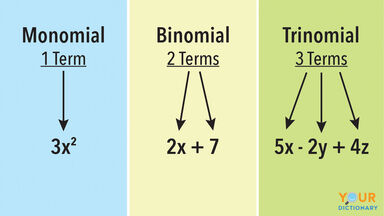
a mathematical expression having the quality of two or more terms.

porism

Rare. a kind of geometrical proposition of ancient Greek mathematics arising during the investigation of some other proposition either as a corollary or as a condition that will render a certain problem indeterminate. —porismatic, adj.

Pythagoreanism

the doctrines and theories of Pythagoras, ancient Greek philosopher and mathematician, and the Pythagoreans, especially number relationships in music theory, acoustics, astronomy, and geometry (the Pythagorean theorem for right triangles), a belief in metempsychosis, and mysticism based on numbers. —Pythagorean, n., adj. —Pythagorist, n.

quadratics

the branch of algebra that deals with equations containing variables of the second power, i.e. squared, but no higher.

spheroidicity

the state of having a roughly spherical shape. Also called spheroidism, spheroidity.

statistology

Rare. a treatise on statistics.

theorematist

a person who discovers or formulates a mathematical theorem. —theorematic, adj.

topology

a branch of mathematics that studies the properties of geometrical forms that remain invariant under certain transformations, as bending or stretching. —topologist, n. —topologic, topological, adj.

trigonometry

the branch of mathematics that treats the measurement of and relationships between the sides and angles of plane triangles and the solid figures derived from them. —trigonometric, trigonometrical, adj.

Learn more about mathematics

Related Articles

link/cite print suggestion box