Ford,
Ford Madox (born Ford Madox Hueffer) 1873-1939; Eng. writer & editor
Ford,
Gerald R(udolph), Jr. (born Leslie Lynch King, Jr.) 1913-2006; 38th president of the U.S. (1974-77)
Ford,
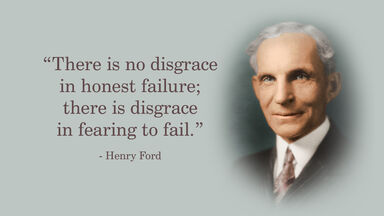
Henry 1863-1947; U.S. automobile manufacturer
Ford,
John 1586-1639?; Eng. dramatist
Ford,
John (born John Martin Feeney) 1894-1973; U.S. film director
See ford in American Heritage Dictionary 4
(fôrd, fōrd)
noun
A shallow place in a body of water, such as a river, where one can cross by walking or riding on an animal or in a vehicle.
transitive verbford·ed, ford·ing, fords
To cross (a body of water) at a ford.
Related Forms:
fordˈa·ble adjective
(fôrd, fōrd), Elizabeth Bloomer Known as “Betty.” Born 1918.
First Lady of the United States (1974-1977) as the wife of President Gerald R. Ford. She supported the Equal Rights Amendment, the arts, and programs for disabled children.
, Ford Madox Originally Ford Hermann Hueffer. 1873-1939.
British writer and editor whose most important novels, The Good Soldier (1915) and the tetralogy Parade's End (1924-1928), examine the bonds of conjugal and adulterous relationships.
, Gerald Rudolph 1913-2006.
The 38th President of the United States (1974-1977), who was appointed Vice President on the resignation of Spiro Agnew (1973) and became President after Richard Nixon's resignation over the Watergate scandal. As President, Ford granted a full pardon to Nixon (1974).
, Henry 1863-1947.
American automobile manufacturer who developed a gasoline-powered automobile (1896), founded the Ford Motor Company (1903), and mass-produced the Model T (1908-1927), the first generally affordable and widely available automobile. His son Edsel Bryant Ford (1893-1943) ran the company from 1919 to 1943, as did his grandson Henry Ford II (1917-1987) from 1945 to 1980.
, John 1586-1639.
English playwright whose works include 'Tis Pity She's a Whore (1633) and collaborative efforts, notably with Thomas Dekker and John Webster.
, John Originally John Martin Feeney. 1894-1973.
American filmmaker who won an Academy Award for his direction of The Informer (1935), The Grapes of Wrath (1940), How Green Was My Valley (1941), and The Quiet Man (1952).