Fiction Definition
fĭkshən
noun
A making up of imaginary happenings; feigning.
Webster's New World
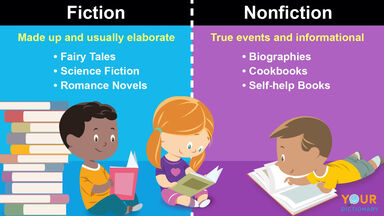
The category of literature, drama, film, or other creative work whose content is imagined and is not necessarily based on fact.
American Heritage
Anything made up or imagined, as a statement, story, etc.
Webster's New World
Works in this category.
The fiction of Virginia Woolf.
American Heritage
Literary narratives, collectively, which portray imaginary characters or events, specif. novels and short stories.
Webster's New World
Synonyms:
Antonyms:
Other Word Forms of Fiction
Noun
Singular:
fictionPlural:
fictionsOrigin of Fiction
-
From Old French ficcion (“dissimulation, ruse, invention”), from Latin fictionem, accusative of fictio (“a making, fashioning, a feigning, a rhetorical or legal fiction”), from fingere (“to form, mold, shape, devise, feign”).
From Wiktionary
-
Middle English ficcioun from Old French fiction from Latin fictiō fictiōn- from fictus past participle of fingere to form dheigh- in Indo-European roots
From American Heritage Dictionary of the English Language, 5th Edition



Fiction Is Also Mentioned In
Find Similar Words
Find similar words to fiction using the buttons below.