Fascism is defined as a system of government where a dictator has complete control.
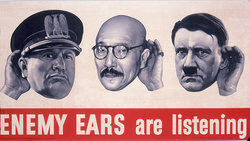
(noun)An example of fascism is the government led by Benito Mussolini in Italy.
See fascism in Webster's New World College Dictionary
noun
Origin: It fascismo < fascio, political group < L fascis: see fasces
See fascism in American Heritage Dictionary 4
noun
Origin:
Origin: Italian fascismo
Origin: , from fascio, group
Origin: , from Late Latin fascium
Origin: , from Latin fascis, bundle
.Related Forms:
See fascism in Ologies
Fascism
See also communism; government; nationalism; politics.
anti-Hitlerism
the principles and practices of people who worked to dissolve Hitler’s dictatorship and fascism.
a member of the German-American Volksbund, a U.S. pro-Nazi organization of the 1930s and 1940s. —Bund, n.
Falangism
the doctrines of the Falange, the fascist party of Spain. —Falangist, n.
1. the tenets of a centralized totalitarian and nationalistic government that strictly controls finance, industry, and commerce, practices rigid censorship and racism, and eliminates opposition through secret police.
2. such a form of government, as that of Italy under Mussolini. —fascist, n. —fascistic, adj.
the tenets of German fascism as developed by Adolf Hitler; Nazism. —Hitlerite, n., adj.
the German form of fascism, especially that of the National Socialist (German: Nazionalsozialist) Workers’ party under Adolf Hitler. —Nazi, n., adj.
Neo-Fascism
the post-World War II rise of a movement whose principal aim is to incorporate the doctrines of fascism into existing political systems. —Neo-Facist, n.
putschism
a method of revolution or overthrow involving secret planning, suddenness, and speed, as Hitler’s 1938 invasion of Austria. —putschist, n.
Rexist
a member of the Belgian pro-fascist party of the 1930s.
Learn more about fascism
Related Articles