earthquake

The definition of an earthquake is the release of sudden and extreme energy that is caused by shifting in the Earth's crust.

Facts About Earthquakes

  • A seismometer is used to record and measure the strength of an earthquake.
  • The Mercalli scale is used to measure the earthquake. Anything seven or above is considered extremely dangerous.
  • Earthquakes usually occur along fault lines, or cracks that occur within the Earth’s crust.
  • Japan, New Zealand, Alaska are all located on one side of a horseshoe-shaped fault line called the "Ring of Fire" that circles the Pacific Ocean and is responsible for frequent earthquakes and frequently erupting volcanos.
  • The "Ring of Fire" zone was responsible for the devastating earthquakes in Indonesia in 2004, in New Zealand in early 2011 as well as a 9.0+ quake and a series of offshore earthquakes in Japan in early 2011 which also resulted in a tsunami.
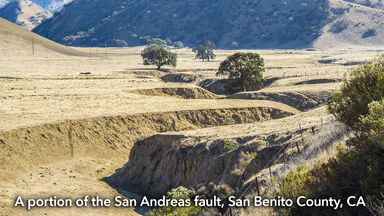
  • The San Andreas Fault is a fault line discovered in 1895 that stretches about one thousand and three hundred kilometers through California in the United States, and through Baja California in Mexico.
  • The San Andreas fault has been the cause behind a number of significant earthquakes, such as the San Francisco Earthquake in 1906, and the Loma Prieta Earthquake in 1989.

(noun)

A shaking in San Francisco that measures 3.2 on the Richter scale is an example of an earthquake.

YourDictionary definition and usage example. Copyright © 2013 by LoveToKnow Corp.

See earthquake in Webster's New World College Dictionary

noun

a shaking or trembling of the crust of the earth, caused by underground volcanic forces or by breaking and shifting of rock beneath the surface

See earthquake in American Heritage Dictionary 4

noun
A sudden movement of the earth's crust caused by the release of stress accumulated along geologic faults or by volcanic activity. Also called seism, temblor.

Learn more about earthquake

earthquake

link/cite print suggestion box