DNA

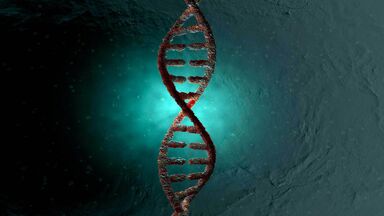
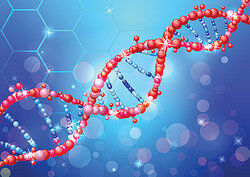
DNA, which stands for deoxyribonucleic acid, is defined as a nucleic acid that contains the genetic code.

Facts About DNA

  • It is a long polymer that is composed of repeating nucleotides.
  • The largest DNA polymer that is known is about two hundred and twenty million base pairs long.
  • In 1869, the physician Friedrich Miescher first isolated DNA. While examining the substance of pus in surgical bandages, he observed a microscopic substance in the pus. He named it nuclein because he observed it in the nuclei of cells.
  • In 1928, Frederick Griffith realized that DNA might actually hold genetic information. In 1952, Alfred Hershey and Martha Chase performed an experiment which confirmed that DNA had a role in heredity.
  • In 1953, James D. Watson and Francis Crick proposed the idea that the DNA’s structure was a double-helix.
  • It was not until scientists used x-ray technology that they were to finally able to see the structure of a DNA molecule. In 1953 Rosalind Franklin was the first to take the most accurate picture, which became known as photograph 51, that truly defined the structure of the double helix shape of DNA.
  • In 1962, the Nobel Peace Prize was given to James Watson, Francis Crick, and Maurice Wilkins (an associate of Franklin who had died by 1962.).
(abbreviation)

An example of DNA is the chain of basic materials in the chromosomes of the human cell.

YourDictionary definition and usage example. Copyright © 2013 by LoveToKnow Corp.

See DNA in Webster's New World College Dictionary

noun

a nucleic acid that is bound in double helical chains by hydrogen bonds between the bases, forming the basic material in the chromosomes of the cell nucleus: it contains the genetic code and transmits the hereditary pattern

Origin: d(eoxyribo)n(ucleic) a(cid)

See DNA in American Heritage Dictionary 4

noun
A nucleic acid that carries the genetic information in the cell and is capable of self-replication and synthesis of RNA. DNA consists of two long chains of nucleotides twisted into a double helix and joined by hydrogen bonds between the complementary bases adenine and thymine or cytosine and guanine. The sequence of nucleotides determines individual hereditary characteristics.

Origin:

Origin: d(eoxyribo)n(ucleic) a(cid)

.

(click for a larger image)

DNA

double-helix DNA model

A. adenine T. thymine C. cytosine G. guanine D. deoxyribose P. phosphate

Learn more about DNA

Related Articles

DNA

link/cite print suggestion box