abbey Hear it!

abbey Definition

ab·bey (abē)

noun

  1. a monastery headed by an abbot, or a convent of nuns headed by an abbess
  2. the monks or nuns in such a place, collectively
  3. a church or building belonging to an abbey

Etymology: ME abbeie < OFr abaie < LL(Ec) abbatia, abbacy

abbey Synonyms

abbey

n.

abbey Usage Examples

Possessives

  • grange: These related to the administration of the abbey's estates and culminated in the loss of the abbey's grange at Micklethwaite.
  • holding: Aelred was also responsible for increasing the abbey's holdings and expanding Rievaulx's circle of benefactors.

Converse of object

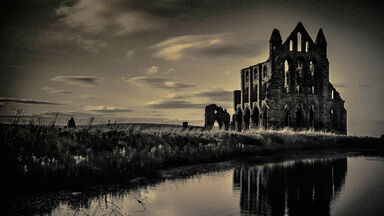
  • ruin: To the left, a ruined abbey, its empty arches framing sky; to the right, a lonely monument on a hill.
  • found: In Saxon times, King Offa founded an abbey at Bath, where King Edgar was crowned in 973.
  • surrender: Abbot Richard Contour surrendered the abbey in July 1539.
  • build: He then hired England's foremost architect, James Wyatt, to build a medieval abbey for him to live in.
  • visit: Local Residents Passes To enable local residents to enjoy visiting the abbey, we offer an annual pass that allows free entry all year.
  • enter: Born at Lydgate, Suffolk, John Lydgate entered the Benedictine abbey of Bury St Edmunds at fifteen.

Adjective modifier

  • cistercian: The ' white gate ' belonged to Vale Royal Abbey, once the largest Cistercian abbey in England.
  • Benedictine: The Benedictine abbeys which line the route are all worth a look.
  • Augustinian: Heraldry, Abbey Strand Within little more than a decade the monastery had been elevated to an Augustinian abbey.
  • medieval: Among later finds were two small jet crosses, probably pendants, from the time of the medieval abbey.
  • ancient: Now partly in ruins, the ancient abbey is still a magic place for many.
  • wealthy: Tavistock Abbey Once the largest and wealthiest abbeys in Southwest England, most of Tavistock Abbey now lies in an L-shaped ruin.

Modifies a noun

  • precinct: Ninevah Farm now occupies the site of Fountains ' former grange of Morker, which stood to the south of the abbey precinct.
  • grange: The home grange was generally the largest and closest of the abbey granges.
  • ruin: Near the abbey ruins stands the partly Norman parish church of St Mary.
  • church: Running along the north side of the abbey church, where the original cloister would have been, a garden has been laid out.
  • gate: The Porter The porter, or his helper, manned the abbey gate from Lauds to Compline each day.
  • estate: They were supported by peasants in the abbey estates.