vegetable

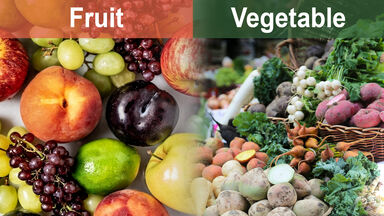
Vegetable is the edible root, tuber, leaf, stem, seed or flower of a plant.

(noun)

An example of a vegetable is spinach.

The definition of a vegetable is a person that is no longer able to mentally function.

(noun)

An example of a vegetable is someone with a brain injury that cannot live without life support.

Vegetable means anything having to do with plants.

(adjective)

An example of vegetable is a soup made primarily with vegetables, “vegetable soup.”

YourDictionary definition and usage example. Copyright © 2013 by LoveToKnow Corp.

See vegetable in Webster's New World College Dictionary

adjective

  1. of, or having the nature of, plants in general: the vegetable kingdom
  2. of, having the nature of, made from, consisting of, or produced by edible vegetables

Origin: ME < ML vegetabilis, vegetative, capable of growth < LL, animating, enlivening < L vegetare: see vegetate

noun

  1. broadly, any plant, as distinguished from animal or inorganic matter
    1. any herbaceous plant that is eaten whole or in part, raw or cooked
    2. the edible part of such a plant, as the root (e.g., a carrot), tuber (a potato), seed (a pea), fruit (a tomato), stem (celery), or leaf (lettuce)
  2. a person thought of as like a vegetable, as because of leading a dull, unthinking existence or because of having lost consciousness, the use of the mind, etc.

Origin: < ML vegetabilia (pl.), growing things, vegetables

See vegetable in American Heritage Dictionary 4

noun
  1. a. A plant cultivated for an edible part, such as the root of the beet, the leaf of spinach, or the flower buds of broccoli or cauliflower.
    b. The edible part of such a plant.
    c. A member of the vegetable kingdom; a plant.
  2. Offensive Slang One who is severely impaired mentally and physically, as by brain injury or disease.
  3. One who is regarded as dull, passive, or unresponsive.
adjective
  1. Of, relating to, or derived from plants or a plant.
  2. Suggestive of or resembling a plant.
  3. Growing or multiplying like plants.

Origin:

Origin: From Middle English, living and growing as plants do

Origin: , from Old French

Origin: , from Medieval Latin vegetābilis

Origin: , from Late Latin, enlivening

Origin: , from Latin vegetāre, to enliven

Origin: , from vegetus, lively

Origin: , from vegēre, to be lively; see weg- in Indo-European roots

.

Word History: Andrew Marvell's “To His Coy Mistress” contains many striking phrases and images, but perhaps most puzzling to modern readers is one in this promise from the speaker to his beloved: “Had we but world enough, and time . . . /My vegetable love should grow/Vaster than empires and more slow.” One critic has playfully praised Marvell for his ability to make one “think of pumpkins and eternity in one breath,” but vegetable in this case is only indirectly related to edible plants. Here the word is used figuratively in the sense “having the property of life and growth, as does a plant,” a use based on an ancient religious and philosophical notion of the tripartite soul. As interpreted by the Scholastics, the vegetative soul was common to plants, animals, and humans; the sensitive soul was common to animals and humans; and the rational soul was found only in humans. “Vegetable love” is thus a love that grows, takes nourishment, and reproduces, although slowly. Marvell's 17th-century use illustrates the original sense of vegetable, first recorded in the 15th century. In 1582 we find recorded for the first time the adjective use of vegetable familiar to us, “having to do with plants.” In a work of the same date appears the first instance of vegetable as a noun, meaning “a plant.” It is not until the 18th century that we find the noun and adjective used more restrictively to refer specifically to certain kinds of plants that are eaten.

Learn more about vegetable

Related Articles

vegetable

link/cite print suggestion box