so

So means the way or amount shown.

(adverb)

An example of so is a golfer showing someone how to hold a golf club at a specific angle.

So is defined as more or less when giving a rough idea of a number or also.

(adverb)

An example of so is telling someone the time when it's roughly 2pm.

So means with the result of something or in order that something.

(conjunction)

  1. An example of so is saying you went to the beach because it was hot.
  2. An example of so is explaining to someone that you left a party to let you go to bed.

YourDictionary definition and usage example. Copyright © 2013 by LoveToKnow Corp.

See so in Webster's New World College Dictionary

adverb

  1. in the way or manner shown, expressed, indicated, understood, etc.; as stated or described; in such a manner: hold the bat just so
    1. to the degree expressed or understood; to such an extent: why are you so late?
    2. to an unspecified but limited degree, amount, number, etc.: to go so far and no further
    3. to a very high degree; very: they are so happy
    4. Informal very much: she so wants to go
  2. for the reason specified; therefore: they were tired, and so left
  3. more or less; approximately that number, amount, etc.: in this sense, so is often regarded as a pronoun: fifty dollars or so
  4. also; likewise [she enjoys music, and so does he]: also used colloquially in contradicting a negative statement [I did so tell the truth!]
  5. then: and so to bed

Origin: ME so, swo < OE swa, so, as, akin to Goth swa, OHG so < IE base *se-, *swe-, refl. particle

conjunction

  1. in order that; with the purpose that: usually followed by that: talk louder so (that) everyone can hear
  2. with the result that; because of this: she smiled, so I did too
  3. Archaic if only; as long as; provided (that)

pronoun

  1. that which has been specified or named: they are friends and will remain so

interjection

used to express surprise, approval or disapproval, triumph, etc.

adjective

  1. true; in reality: that's so
  2. in proper order: everything must be just so

noun

Music sol

  1. south
  2. southern

strikeout(s)

See so in American Heritage Dictionary 4

adverb
  1. In the condition or manner expressed or indicated; thus: Hold the brush so.
  2. To the amount or degree expressed or understood; to such an extent: She was so weary that she fell.
  3. To a great extent; to such an evident degree: But the idea is so obvious.
  4. Because of the reason given; consequently: She was weary and so fell.
  5. Afterward; then: to the gas station and so home.
  6. In the same way; likewise: You were on time and so was I.
  7. Apparently; well, then. Used in expressing astonishment, disapproval, or sarcasm: So you think you've got troubles?
  8. In truth; indeed: “You aren't right.” “I am so!”
adjective
  1. True; factual: I wouldn't have told you this if it weren't so.
  2. In good order: Everything on his desk must be exactly so.
conjunction
Usage Problem
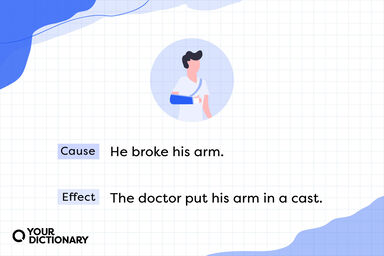
  1. With the result or consequence that: He failed to appear, so we went on without him.
  2. In order that: I stayed so I could see you.
pron.
Such as has already been suggested or specified; the same: She became a loyal friend and remained so.
interjection
Used to express surprise or comprehension: So! You've finished your work at last.

Origin:

Origin: Middle English

Origin: , from Old English swā; see swo- in Indo-European roots

.

Usage Note: Many critics and grammarians have insisted that so must be followed by that in formal writing when used to introduce a clause giving the reason for or purpose of an action: He stayed so that he could see the second feature. But since many respected writers use so for so that in formal writing, it seems best to consider the issue one of stylistic preference: The store stays open late so (or so that) people who work all day can buy groceries. • Both so and so that are acceptably used to introduce clauses that state a result or consequence: The Bay Bridge was still closed, so (or so that) the drive from San Francisco to the Berkeley campus took an hour and a half. • So is frequently used in informal speech to string together the elements of a narrative. In most cases, this practice should not be carried over into formal writing, where readers need connections to be made more explicit. • Critics have sometimes objected to the use of so as an intensive meaning “to a great degree or extent,” as in We were so relieved to learn that the deadline had been extended. This usage is most common in informal contexts, perhaps because, unlike the neutral very, it presumes that the listener or reader will be sympathetic to the speaker's evaluation of the situation. Thus one would be more apt to say It was so unfair of them not to invite you than to say It was so fortunate that I didn't have to put up with your company. For just this reason, the construction may occasionally be used to good effect in more formal contexts to invite the reader to take the point of view of the speaker or subject: The request seemed to her to be quite reasonable; it was so unfair of the manager to refuse. See Usage Note at as1.Regional Note: New England speakers often use a negative form such as so didn't where other varieties would use the positive so did, as in Sophie ate all her strawberries and so didn't Amelia. Since this usage may confuse a speaker who has not previously encountered it, it is best avoided in writing.

noun
Music
Variant of sol1.

abbreviation
  1. seller's option
  2. significant other
  3. strikeout

or So.

abbreviation
  1. south
  2. southern

abbreviation
Somalia (in Internet addresses)

Learn more about so

Related Articles

link/cite print suggestion box