salmonella

Salmonella is a commonly-occuring bacteria that causes food poisoning and typhoid fever, or the type of food poisoning caused by this bacteria.

Facts About Salmonella

  • It is the second-highest reported incidence of food borne sickness.
  • Can be fatal if not treated properly. Every year salmonella poisoning causes roughly 600 fatalities.
  • Thousands of cases are never diagnosed because they are passed off as stomach flu or something much less severe.
  • Symptoms include dehydration, vomiting, diarrhea, muscle and joint pain.
  • Treatment usually just involves around five to seven days of rest and dilution of the bacteria through the ingestion of distilled water.
  • Rehydrating may also require the use of intravenous fluids.
  • Antibiotics may be required in order to ward off any long-term or severe effects of the infection.
(noun)

When you touch raw chicken and get bacteria on your hands that makes you very ill, the bacteria is an example of salmonella.

YourDictionary definition and usage example. Copyright © 2013 by LoveToKnow Corp.

See salmonella in Webster's New World College Dictionary

noun pl. salmonellae , salmonella, salmonellas

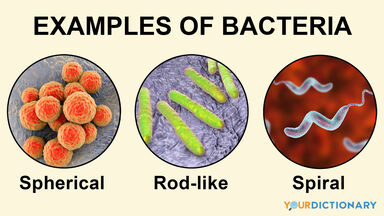
any of a genus (Salmonella) of Gram-negative, rod-shaped bacteria that cause various diseases in people and domestic animals, including typhoid fever and food poisoning

Origin: ModL: so named after D. E. Salmon (1850-1914), U.S. pathologist

See salmonella in American Heritage Dictionary 4

noun pl. sal·mo·nel·lae (-nĕlˈē) or sal·mo·nel·las or salmonella
Any of various rod-shaped bacteria of the genus Salmonella, many of which are pathogenic, causing food poisoning, typhoid, and paratyphoid fever in humans and other infectious diseases in domestic animals.

Origin:

Origin: New Latin Salmonella, genus name

Origin: , after Daniel Elmer Salmon (1850-1914), American pathologist

.

Learn more about salmonella

link/cite print suggestion box