reindeer

(rāndir′)

noun pl. reindeer or Rarereindeers

any of a genus (Rangifer) of large deer, including the caribou, with branching antlers in both sexes, found in northern regions: it is domesticated as a beast of burden and as a source of milk, meat, and leather

Origin: ME reindere < ON hreindȳri < hreinn, reindeer (< IE *erei-, horned animal < base *er-, top of the head, horn > horn, L cerebrum) + dȳr, animal, deer

See reindeer in American Heritage Dictionary 4

noun pl. reindeer reindeer or rein·deers
A large deer (Rangifer tarandus) of the Arctic and northern regions of Eurasia and North America, having branched antlers in both sexes.

Origin:

Origin: Middle English reindere

Origin: : Old Norse hreinn, reindeer; see ker-1 in Indo-European roots

Origin: + Middle English der, animal; see deer 

.

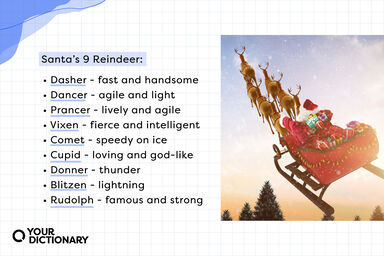
Word History: Although Saint Nick uses reins on his reindeer and reindeer are used to pull sleds in Lapland and northern Siberia, the word reindeer has nothing to do with reins. The element -deer is indeed our word deer, but the rein- part is borrowed from another language, specifically from the Scandinavian languages spoken by the chiefly Danish and Norwegian invaders and settlers of England from the 9th to the 11th century. Even though the Old Icelandic language in which much of Old Norse literature is written is not the same variety of Old Norse spoken by these settlers of England, it is close enough to give us an idea of the words that were borrowed into English. Thus we can cite the Old Icelandic word hreinn, which means “reindeer,” as the source of the first part of the English word. The word reindeer is first recorded in Middle English in a work composed before 1400.

Learn more about reindeer

link/cite print suggestion box