Morse code Hear it!

Morse code Telecom Definition
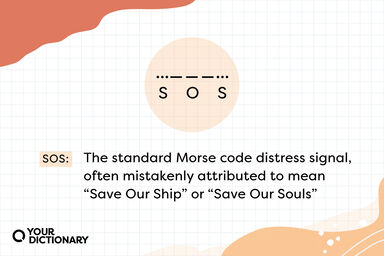
The first widely accepted standard coding scheme for digital data communications. Morse code was invented by Samuel Morse sometime prior to 1844 for use with the electric telegraph. Friedrich Clemens Gerke invented the International Morse Code in 1848 out of necessity, as some of the spaces in letters created difficulty in radiotelegraphy. International Morse code was standardized by the International Telegraph Union (ITU) in 1865 and was widely used in radiotelegraphy through the early twentieth century. Morse code was the primary communication code for many years, until Emile Baudot invented the Baudot Distributor in the 1870s. International Morse code remains widely used by amateur radio operators, or hams, although proficiency is no longer required. Morse code uses series of short and long marks in the form of dots (short marks known as dits to radio operators) and dashes (long marks, or dahs), with spaces between them, to represent letters, numbers, punctuation marks, and procedural signals (prosigns). The length of the spaces varies, with a short space between dots and dashes within a character, a longer space between characters, an even longer space between words, and a yet longer space between sentences. In order to speed transmission, the fewest number of dots and dashes represent commonly used letters (e.g., E is ·,T is --, A is · --). Commonly used words are abbreviated (e.g., Calling is abbreviated CG, or -- · -- · -- -- ·, as are commonly used phrases (e.g., Love and Kisses is abbreviated 88, or -- -- -- · · --- -- · ·.Table M-1 provides the International Morse Code for English letters, numbers, and select punctuation marks and prosigns.
Table M-1: International Morse Code
LetterCodeLetterCodeNumberCodeCode
A· --N-- ·1· -- -- -- --Period (.)· -- · -- · --
B-- · · ·O-- -- --2· · -- -- --Comma (,)-- --· · -- --
C-- · -- ·P· -- -- ·3· · · -- --Question (?)· · -- --· ·
D-- · ·Q-- -- · --4· · · · --Colon (:)-- -- -- · · ·
E·R· -- ·5· · · · ·Semicolon (;)-- · -- · -- ·
F· · -- ·S· · ·6-- · · · ·Hyphen (-)-- · · · · --
G-- -- ·T--7-- -- · · ·Dollar ($)· · · -- · · --
H· · · ·U· · --8-- -- -- · ·At Sign (@)· -- -- · -- ·
I· ·V· · · --9-- -- -- -- ·Stop· -- · -- ·
J· -- -- --W· -- --0-- -- -- -- --Wait· -- · · ·
K-- · --X-- · · ---- · --
L· -- · --Y-- · -- --Received· -- ·
M-- --Z-- -- · ·
Note: The @ sign, a combination of a and c, was added in 2004 in order that telegraphers could send e-mail addresses.There are extensions to International Morse Code to accommodate letters with diacritical marks used in non-English alphabets. See also dash, dot, ham, ITU, and telegraph.

Browse dictionary entries near Morse code

  1. Morse
  2. Mors
  3. morrow
  4. morro
  5. Morrison
  6. Morris Worm
  7. Morris Jesup
  8. Morris chair
  9. morris
  10. -morphous
  1. Morse, Samuel Finley Breese
  2. morsel
  3. mort
  4. mortadella
  5. mortal
  6. mortality
  7. mortality table
  8. mortar
  9. mortarboard
  10. mortgage