geek

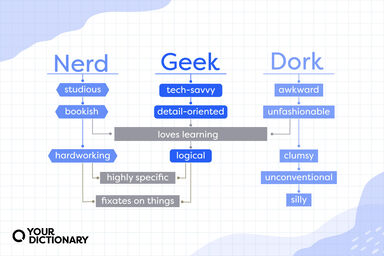
The definition of a geek is a slang word for a computer expert, someone who loves computers or someone who is socially or physically awkward.

(noun)

  1. An example of a geek is a person who has fun spending his entire day figuring out how computers work.
  2. An example of a geek is a person who has a genius IQ but is very uncomfortable in social settings.

YourDictionary definition and usage example. Copyright © 2013 by LoveToKnow Corp.

See geek in Webster's New World College Dictionary

noun

  1. a performer of grotesque or depraved acts in a carnival, etc., such as biting off the head of a live chicken
  2. Slang any person considered to be different from others in a negative or bizarre way, as a teenager seen as being socially or physically awkward
  3. Slang a person regarded as being especially enthusiastic, knowledgeable, and skillful in the use of computers

Origin: < dial. geck, fool < Du gek, madman, fool < MLowG geck: orig. echoic of unintelligible cries

Related Forms:

See geek in American Heritage Dictionary 4

noun
  1. a. A person regarded as foolish, inept, or clumsy.
    b. A person who is single-minded or accomplished in scientific or technical pursuits but is felt to be socially inept.
  2. A carnival performer whose show consists of bizarre acts, such as biting the head off a live chicken.
transitive verb geeked, geek·ing, geeks
To excite emotionally: I'm geeked about that new video game.

Origin:

Origin: Perhaps alteration of dialectal geck, fool

Origin: , from Low German gek

Origin: , from Middle Low German

.

Related Forms:

  • geekˈy adjective
Our Living Language Our word geek is now chiefly associated with contemporary student and computer slang, as in computer geek. In fact, geek is first attested in 1876 with the meaning “fool,” and it later also came to mean “a performer engaging in bizarre acts like biting the head off a live chicken.” Perhaps the use of geek to describe a circus sideshow has contributed to its current popularity. The circus was a much more significant source of entertainment in the United States in the 19th and early 20th centuries than it is now, and large numbers of traveling circuses left a cultural legacy in various unexpected ways. Superman and other comic book superheroes owe much of their look to circus acrobats, who were similarly costumed in capes and tights. We also owe the word ballyhoo to the circus; its ultimate origin is unknown, but in the late 1800s it referred to a flamboyant free musical performance conducted outside a circus with the goal of luring customers to buy tickets to the shows inside. Other words and expressions with circus origins include bandwagon (coined by P.T. Barnum in 1855) and Siamese twin.

Learn more about geek

geek

link/cite print suggestion box