city-state Hear it!

city-state Definition

city-state (-stāt′)

noun

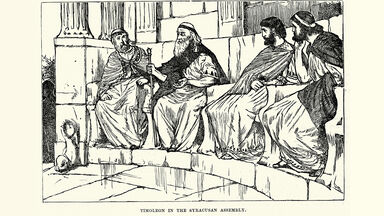
a state made up of an independent city and the territory directly controlled by it, as in ancient Greece

city-state Usage Examples

Converse of object

  • self-govern: Relatively isolated and impoverished communities turned themselves into rich self-governing city-states exercising power that was felt and feared over a wide area.
  • populate: The southern alluvial plain of Sumer and the more northerly Akkad were once densely populated city-states.
  • war: For example, Stein ( 2002 ) compared the current state of bioinformatics to the warring Italian city-states of the middle ages.

Adjective modifier

  • Greek: The need for philosophy, he thought, began with the break-up of the harmony of the polis, the ancient Greek city-state.
  • Italian: The year before his birth, France had bought Corsica from the Italian city-state of Genoa.
  • independent: The Spartans are trying to fight the independent city-state of Arcadia which is powerful in its own right.
  • ancient: The need for philosophy, he thought, began with the break-up of the harmony of the polis, the ancient Greek city-state.
  • small: The Classic period Maya were organized into numerous small city-states, each with their own king.
  • Sumerian: This was when the two Sumerian city-states of Lagash and Umma brokered an agreement to end a water dispute along the Tigris River.

Modifies a noun

  • system: To summarize: the coastal strip in LB II was organized as a fragmented city-state system and was in decline with evidence of unrest.

Noun used with modifier

  • island: Leaving aside such island city-states as Singapore and Hong Kong, we now equal Holland as the most densely populated country in the world.