spiking

Variant of spike

spike definition

spike (spīk)

noun

  1. a long, heavy nail
  2. a sharp-pointed part or projection, usually slender and of metal, as along the top of an iron fence, etc.
  3. any long, slender, pointed object, as the unbranched antler of a young deer
    1. any of a number of sharp or pointed metal projections on the soles, and often on the heels, of shoes used for baseball, golf, track, etc. to prevent slipping
    2. a pair of such shoes
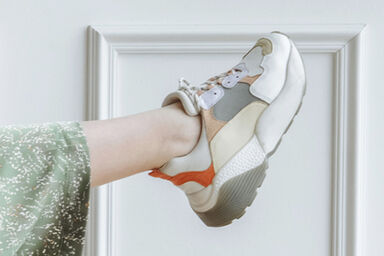
    3. a high, very thin heel on a woman's shoe
  4. ☆ a young mackerel not more than six inches long
    1. a transient wave or variation in potential difference that propagates along a nerve axon
    2. a graphic recording or tracing of this, as any of the jagged peaks in an electroencephalogram
  5. a sudden, rapid rise, as in blood pressure

Etymology: ME < ON spīkr, a nail, spike, or < MDu & MLowG spīker, both ult. < IE base *(s)p(h)ei-, sharp, pointed splinter > spit, spoke, L spica, ear of grain, spina, spine

transitive verb spiked, spiking spik′·ing

  1. to fasten or fit with or as with a spike or spikes
  2. to mark, pierce, cut, etc. with a spike or spikes, or impale on a spike
  3. to make (a cannon) unusable by driving a spike into the touchhole
  4. to cause to rise suddenly and rapidly
  5. to thwart, frustrate, or block (a scheme, etc.)
  6. Slang to add a substance, as a narcotic or other drug, to (a drink, food, etc.); specif., to add alcoholic liquor to (a drink)
  7. Baseball to injure with the spikes on one's shoes
  8. Football to throw (the football) to the ground, esp. in celebration of scoring a touchdown
  9. Volleyball to leap into the air while close to the net and smash (the ball) into the opponents' court

intransitive verb

to rise suddenly and rapidly
spike Idioms

hang up one's spikes

Informal to retire, as from a professional sport

Webster's New World College Dictionary Copyright © 2009 by Wiley Publishing, Inc., Cleveland, Ohio.
Used by arrangement with John Wiley & Sons, Inc.

Comments
Improve this definition.
Do you have more to add? Share your linguistic knowledge or observation.
/Register to save your comments.