Neptune

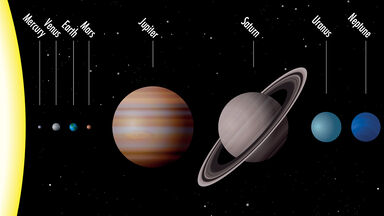
The definition of Neptune is the eighth planet from the Sun.

Facts About Neptune

  • Astronomers had noticed that Uranus was not always where they expected it to be, so they concluded that another planet’s gravity was influencing it.
  • Neptune is the coldest planet in the solar system. Surface temperatures can get down to -235 degrees Celsius.
  • In size and color, it is almost a twin to Uranus.
  • Its diameter is 30,775 miles which is four times more than Earth’s.
  • Neptune’s orbit around the Sun takes 165 Earth years.
  • Neptune's atmosphere consists of hydrogen, helium, ammonia and methane. It appears blue because of the methane in its atmosphere.
  • The upper layer of Neptune's atmosphere consists of frozen methane and the lower, dark layer is made of hydrogen sulfide.
  • The layers of the atmosphere swirl rapidly, up to 750 miles an hour, and occasionally there are huge storms that rotate like hurricanes.
  • It has a large storm in its southern hemisphere called the Great Dark Spot, similar to Jupiter's Greast Red Spot.
  • Neptune’s winds are the strongest in the solar system.
  • Scientists think there may be a core of rock and ice.
  • There are 13 moons orbiting around Neptune.
  • There are three rings that are fairly thick and one very faint ring. They are much smaller than the rings of Saturn and are made of dust.
  • In 1989, Voyager 2 observed geysers or volcanoes that were spewing liquid nitrogen and recorded 11 moons.
(noun)

An example of Neptune is a planet with regular winds of around 750mph.

YourDictionary definition and usage example. Copyright © 2013 by LoveToKnow Corp.

See Neptune in Webster's New World College Dictionary

noun

  1. Rom. Myth. the god of the sea: identified with the Greek Poseidon
  2. the sea personified
  3. Origin: ModL

    the fourth largest planet of the solar system and normally the eighth in distance from the sun: it has a thin, icy ring system around its equator: diameter, c. 49,530 km (c. 30,780 mi); period of revolution, 164.79 earth years; period of rotation, 16.11 hours; 13 satellites; symbol, ♆

Origin: ME < L Neptunus, prob. < IE *nebhtus < base *nebh-, moist > nebula

Related Forms:

See Neptune in American Heritage Dictionary 4

noun
  1. a. Roman Mythology The god of water, later identified with the Greek Poseidon.
    b. The sea.
  2. The eighth planet from the sun, having a sidereal period of revolution around the sun of 164.8 years at a mean distance of 4.5 billion kilometers (2.8 billion miles), a mean radius of 24,000 kilometers (15,000 miles), and a mass 17.2 times that of Earth.

Origin:

Origin: Latin Neptūnus

.

Related Forms:

  • Nep·tuˈni·an (-to͞oˈnē-ən, -tyo͞oˈ-) adjective

Learn more about Neptune

Related Articles

Neptune

link/cite print suggestion box