Dictionary Home » Dictionary Definitions » natural selection

natural selection

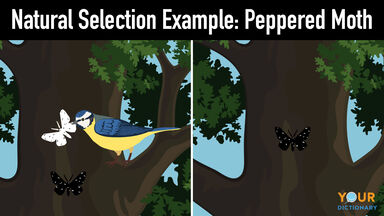
Natural selection is part of Darwin's theory of evolution saying that those individuals within a species that don't adapt well to their environment will eventually die off, while those that do adapt will continue on with future generations.

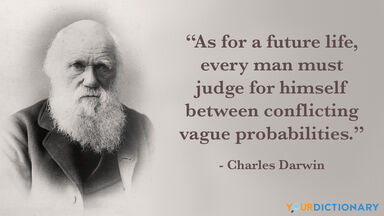
Facts About Darwin's Research

  • Recently graduated from college, Darwin joined up with a British Navy mapping ship that was going on an expedition around the world.
  • Darwin wasn’t the first scientist to study the idea of evolution; however, he was the first to come up with a workable theory about how, exactly, this evolution took place.
  • Darwin's research focused on:
  • The adaptation of a species in order to survive in various conditions
  • The variation among individuals that caused them to live while others died
  • The passing on of those advantageous traits
(noun)

An example of natural selection are insects which are resistant to pesticides.

YourDictionary definition and usage example. Copyright © 2013 by LoveToKnow Corp.

See natural selection in Webster's New World College Dictionary

in evolution, the process by which those individuals (of a species) with characters that help them to become adapted to their specific environment tend to leave more progeny and transmit their characters, while those less able to become adapted tend to leave fewer progeny or die out, so that in the course of generations there is a progressive tendency in the species to a greater degree of adaptation

See natural selection in American Heritage Dictionary 4

noun
The process in nature by which, according to Darwin's theory of evolution, only the organisms best adapted to their environment tend to survive and transmit their genetic characteristics in increasing numbers to succeeding generations while those less adapted tend to be eliminated.

Learn more about natural selection

Related Articles

link/cite print suggestion box