lewis

(lo̵̅o̅is)

noun

a device for hoisting blocks of stone, consisting of a dovetailed iron tenon made in sections that fit into a mortise cut into the stone

Origin: prob. < the name Lewis

noun

a masculine name: dim. Lew, Lewie

  1. Lewis, C(live) S(taples) 1898-1963; Brit. writer, born in Ireland
  2. Lewis, John L(lewellyn) 1880-1969; U.S. labor leader
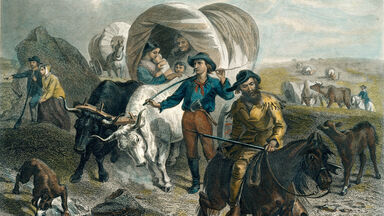
  3. Lewis, Meriwether 1774-1809; Am. explorer: co-leader of the Lewis & Clark expedition (1804-06) to the Northwest
  4. Lewis, Sinclair 1885-1951; U.S. novelist
  5. Lewis, (Percy) Wyndham 1884-1957; Brit. author & painter, born in the U.S.

See lewis in American Heritage Dictionary 4

noun
A dovetailed iron tenon made of several parts and designed to fit into a dovetail mortise in a large stone so that it can be lifted by a hoisting apparatus. Also called lewisson.

Origin:

Origin: Perhaps from the name Lewis

.

American athlete. Winner of nine Olympic gold medals, including four in the long jump, he duplicated in the 1984 Olympics Jesse Owens's feat of winning the 100-meter dash, the 200-meter dash, the long jump, and the four-by-100-meter relay.

, Cecil Day

See Cecil Day Lewis.

, C(live) S(taples) 1898-1963.

British writer and critic. His works include The Allegory of Love (1936) and a series of fictional books for children collectively known as The Chronicles of Narnia (1950-1956).

, Edward 1918-2004.

American biologist who shared a 1995 Nobel Prize in medicine. His research showed how a family of genes controls the embryonic development of the body segment of fruit flies.

, (Harry) Sinclair 1885-1951.

American novelist who satirized middle-class America in his 22 works, including Babbitt (1922) and Elmer Gantry (1927). He was the first American to receive (1930) a Nobel Prize for literature.

, Henry 1932-1996.

American conductor who, with the Los Angeles Philharmonic, became the first African American to conduct a major symphony orchestra (1961).

, Jerry Lee Born 1935.

American musician and singer. Noted for his lively performing style and driving piano rhythms, he created such hit songs as “Great Balls of Fire” (1957).

, John Llewellyn 1880-1969.

American labor leader who was president of the United Mine Workers of America (1920-1960) and the Congress of Industrial Organizations (1935-1940).

, Matthew Gregory 1775-1818.

British gothic writer who is remembered for the novel The Monk (1796), for which he was known as “Monk Lewis.”

, Meriwether 1774-1809.

American soldier and explorer who led the Lewis and Clark expedition (1803-1806) from St. Louis to the mouth of the Columbia River and served as governor of the Louisiana Territory (1806-1809).

, (Percy) Wyndham 1884-1957.

British writer and artist. He wrote the novels The Apes of God (1930) and Revenge for Love (1937) and painted portraits of T.S. Eliot and Ezra Pound.

Learn more about lewis

link/cite print suggestion box