from

From is defined as a starting point, removal or separation.

(preposition)

  1. An example of from is the starting time of an open house, such as "from 1 pm to 4 pm."
  2. An example of from is to take a toy away out of the hands of a child.
  3. An example of from are a cottage and a garage that are separated by 100 feet.

YourDictionary definition and usage example. Copyright © 2013 by LoveToKnow Corp.

See from in Webster's New World College Dictionary

    1. beginning at (a point of departure as for motion, duration, or action): leaving from the station
    2. at a certain distance away with respect to: a mile from town
  1. starting with (the first of two named limits): from noon to midnight
  2. out of; derived or coming out of: he took a comb from his pocket; lava spewed from the volcano
  3. with (a person or thing) as the source, maker, sender, speaker, teacher, etc.: a crate made from wood, a letter from Mary, facts learned from reading
  4. at a place not near to; out of contact with: used to express absence, removal, separation, etc.: away from danger, far from home
  5. out of the whole of; out of unity or alliance with: take two from four; he withdrew from the class
  6. out of the possibility of; prevented or excluded with respect to: kept from going on the hike
  7. out of the possession or control of; free with respect to: released from jail
  8. as not being like: used to express difference, distinction, etc.: to tell one sister from the other
  9. because of; caused by; having the reason or motive of: to tremble from fear
  10. Origin: < Yiddish

    Slang about: used with know: they don't know from good taste

Origin: ME < OE from, fram, akin to Goth fram, forward, away, ON frā < IE base *pro-, var. of *per-, beyond, ahead > for, fore, first

See from in American Heritage Dictionary 4

preposition
  1. a. Used to indicate a specified place or time as a starting point: walked home from the station; from six o'clock on. See Usage Notes at escape, whence.
    b. Used to indicate a specified point as the first of two limits: from grades four to six.
  2. Used to indicate a source, cause, agent, or instrument: a note from the teacher; taking a book from the shelf.
  3. Used to indicate separation, removal, or exclusion: keep someone from making a mistake; liberation from bondage.
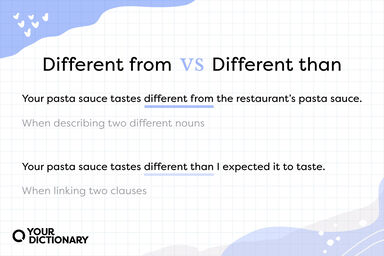
  4. Used to indicate differentiation: know right from wrong.
  5. Because of: faint from hunger.

Origin:

Origin: Middle English

Origin: , from Old English fram, forward, from; see per1 in Indo-European roots

.

Learn more about from

link/cite print suggestion box