franklin

(fraŋklin)

noun

a freeholder; specif., in England in the 14th-15th cent., a landowner of free but not noble birth, ranking just below the gentry

Origin: ME frankelein < Anglo-Fr fraunkelain < ML francelengus < francus (see frank) + Gmc *-ling (see -ling)

noun

a masculine name

Origin: see franklin

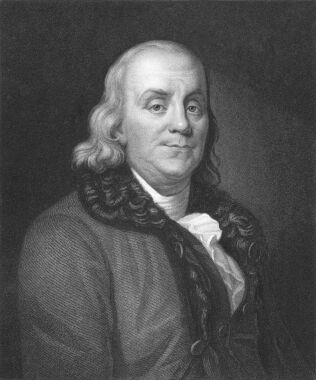
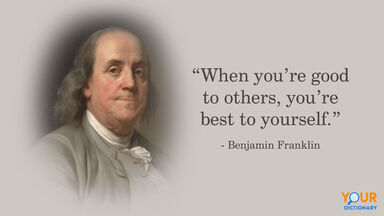
  1. Franklin, Benjamin 1706-90; Am. statesman, scientist, inventor, & writer
  2. Franklin, Sir John 1786-1847; Eng. arctic explorer

former district of the Northwest Territories, Canada

Origin: see franklin

See franklin in American Heritage Dictionary 4

noun
A medieval English freeholder of nonnoble birth holding extensive property.

Origin:

Origin: Middle English frankelein

Origin: , from Anglo-Norman fraunclein

Origin: , from Anglo-Norman franc; see frank1

.

American singer known for her recordings of soul and gospel music. Her popular songs include “Respect” (1967) and “Chain of Fools” (1968).

, Benjamin 1706-1790.

American public official, writer, scientist, and printer. After the success of his Poor Richard's Almanac (1732-1757), he entered politics and played a major part in the American Revolution. Franklin negotiated French support for the colonists, signed the Treaty of Paris (1783), and helped draft the Constitution (1787-1789). His numerous scientific and practical innovations include the lightning rod, bifocal spectacles, and a stove.

, Sir John 1786-1847.

British explorer who led a search for the Northwest Passage (1845-1847) on which he and his 129-man crew perished. A record of the expedition's discovery of the passage was found in 1857.

, John Hope Born 1915.

American historian noted for his studies of African-American history, such as From Slavery to Freedom (1947).

, Rosalind Elsie 1920-1958.

British x-ray crystallographer whose studies of DNA provided crucial information that led to the discovery of its spiral structure by Francis Crick and James D. Watson.

Learn more about franklin

link/cite print suggestion box