either

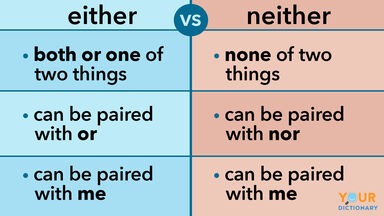
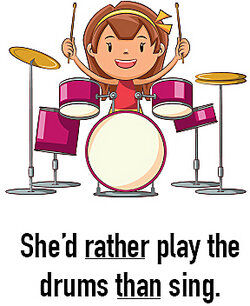
The definition of either is one or the other.

(adjective)

An example of either is riding in one of two cars.

Either is defined as one or the other.

(pronoun)

An example of either is a chocolate chip cookie or a brownie.

YourDictionary definition and usage example. Copyright © 2013 by LoveToKnow Corp.

See either in Webster's New World College Dictionary

adjective

  1. one or the other (of two): use either hand
  2. each (of two); the one and the other: he had a tool in either hand

Origin: ME < OE æghwæther < a (æ), always (see ay) + gehwæther, each of two (see whether): akin to, and of same formation as, OHG eogihwedar

pronoun

one or the other (of two)

conjunction

the first element of the pair of disjunctive correlatives either … or, implying a choice of alternatives [either go or stay]: eitheror is sometimes used to refer to more than two, although this use is objected to by some: bring either cookies, doughnuts, or some other kind of pastry

adverb

  1. any more than the other; also: used after negative expressions: if you don't go, I won't either
  2. Informal certainly; indeed: used as an intensifier in a negative statement: “It's mine.”“It isn't either!”

See either in American Heritage Dictionary 4

pron.
The one or the other: Which movie do you want to see? Either will be fine.
conjunction
Used before the first of two or more coordinates or clauses linked by or: Either we go now or we remain here forever.
adjective
  1. Any one of two; one or the other: Wear either coat.
  2. One and the other; each: rings on either hand.
adverb
Likewise; also. Used as an intensive following negative statements: If you don't order a dessert, I won't either.

Origin:

Origin: Middle English

Origin: , from Old English ǣther, ǣghwǽther; see kwo- in Indo-European roots

.

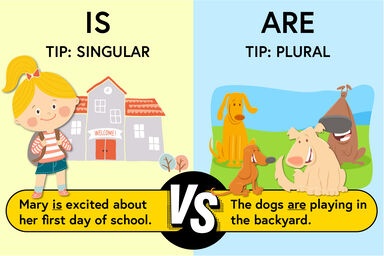
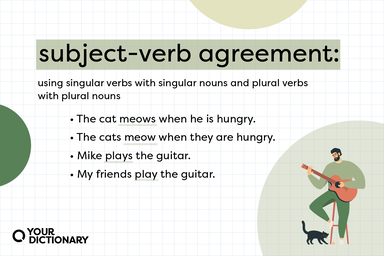
Usage Note: The traditional rule holds that either should be used only to refer to one of two items and that any is required when more than two items are involved: Any (not either) of the three opposition candidates still in the race would make a better president than the incumbent. But reputable writers have often violated this rule, and in any case it applies only to the use of either as a pronoun or an adjective. When either is used as a conjunction, no paraphrase with any is available, and so either is unexceptionable even when it applies to more than two clauses: Either the union will make a counteroffer or the original bid will be refused by the board or the deal will go ahead as scheduled. • In eitheror constructions, the two conjunctions should be followed by parallel elements. The following is regarded as incorrect: You may either have the ring or the bracelet (properly, You may have either the ring or the bracelet). The following is also incorrect: She can take either the examination offered to all applicants or ask for a personal interview (properly, She can either take … ). • When used as a pronoun, either is singular and takes a singular verb: The two left-wing parties disagree with each other more than either does (not do) with the Right. When followed by of and a plural noun, either is often used with a plural verb: Either of the parties have enough support to form a government. But this usage is widely regarded as incorrect; in an earlier survey it was rejected by 92 percent of the Usage Panel. • When all the elements in an either … or construction (or a neither … nor construction) used as the subject of a sentence are singular, the verb is singular: Either Eve or Herb has been invited. Analogously, when all the elements in the either … or construction are plural, the verb is plural too: Either the Clarks or the Kays have been invited. When the construction mixes singular and plural elements, however, there is some confusion as to which form the verb should take. It has sometimes been suggested that the verb should agree with whichever noun phrase is closest to it; thus one would write Either Eve or the Kays have been invited, but Either the Kays or Eve has been invited. This pattern is accepted by 54 percent of the Usage Panel. Others have maintained that the construction is fundamentally inconsistent whichever number is assigned to the verb and that such sentences should be rewritten accordingly. See Usage Notes at every, neither, or1, they.

Learn more about either

link/cite print suggestion box