Could Definition
ko͝od
verb
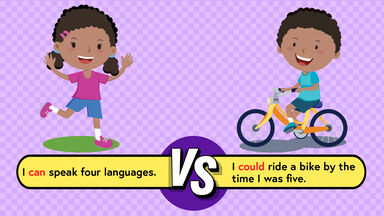
Used to indicate ability or permission in the past.
I could run faster then. Only men could go to the club in those days.
American Heritage
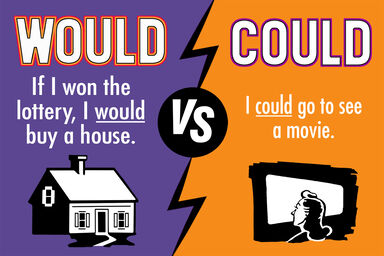
Used with hypothetical or conditional force.
If we could help, we would.
American Heritage
Used to indicate tentativeness or politeness.
I could be wrong. Could you come over here?
American Heritage
He gave what he could give.
Webster's New World
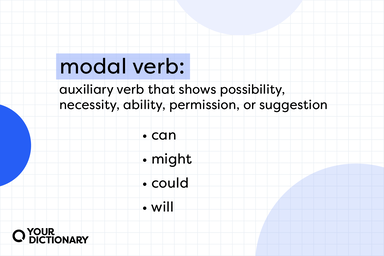
Used as a modal auxiliary in verbal phrases with present or future time reference, generally equivalent to can in meaning and use, with the following functions:
Webster's New World
Origin of Could
-
From Middle English coude, from Old English cuþ, preterite form of cunnan (“to be able”). The addition of the silent 'l' was likely a misappropriation attempting to normalize with modal verbs will/would and shall/should. However, while the letter l was historically pronounced in the latter two, can never did have an l sound in it.
From Wiktionary
Related Articles

Find Similar Words
Find similar words to could using the buttons below.