(wûr)
verb- Second person singular and plural and first and third person plural past indicative of be.
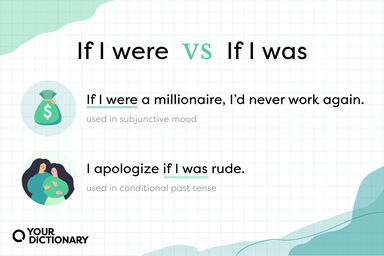
- Past subjunctive of be. See Usage Notes at if, wish.
Our Living Language Although many irregular verbs in English once had different singular and plural forms in the past tense, only one still does today—
be, which uses the form
was with singular subjects and the form
were with plural subjects, as well as with singular
you. The relative simplicity in the forms of most verbs reflects the long-standing tendency of English speakers to make irregular verbs more regular by reducing the number of forms used with different persons, numbers, and tenses. Since past
be is so irregular, speakers of different vernacular dialects have regularized it in several ways. In the United States, most vernacular speakers regularize past
be by using
was with all subjects, whether singular or plural. This pattern is most common in Southern-based dialects, particularly African American Vernacular English (AAVE). Some speakers use
were with both singular and plural subjects; thus, one may hear
she were alongside
we were. However, this usage has been much less widespread than the use of
was with plural subjects and appears to be fading. • In some scattered regions in the South, particularly in coastal areas of North Carolina, Virginia, and Maryland, vernacular speakers may regularize past
be as
was in positive contexts and regularize it as
weren't in negative contexts, as in
He was a good man, weren't he? or
They sure was nice people, weren't they? At first glance, the
was/weren't pattern appears to come from England, where it is fairly commonplace. However, in-depth study of the
was/weren't pattern in coastal North Carolina indicates that it may have developed independently, for it is found to a greater extent in the speech of younger speakers than in that of older coastal residents. • Other forms of negative past
be include
warn't, common in American folk speech in the 18th and 19th centuries, and
wont, as in
It wont me or
They wont home. Wont, which often sounds just like the contraction
won't, historically has been concentrated in New England and is also found in scattered areas of the South.