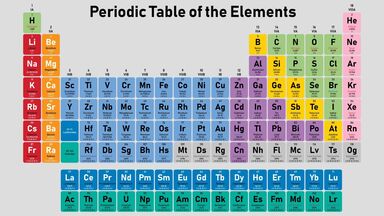
The definition of sodium is an alkali metal with the atomic number of 11.
Facts About Sodium
- Its symbol is Na, which stands for the Latin word "natrium" meaning sodium carbonate.
- One of the ninety-two substances found in nature that cannot be broken down into smaller pieces.
- As a metal, it is soft, light, and easy to manipulate. It conducts heat and electricity well.
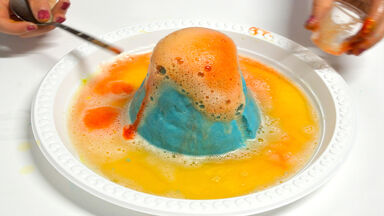
- Sodium is highly reactive to water and reacts explosively by igniting.
- Yellow fireworks are made with sodium compounds: sodium nitrate, sodium chloride, and cryolite.
- At room temperature, sodium can be cut easily with a dull knife.
- Its color is silvery white.
- It does not occur in nature freely. Rather, pure sodium is processed from sodium chloride in a factory.
- The crust of the Earth is made up of 2.6% sodium.
- Sodium is less dense than water so it floats on water.
- It is the sixth most abundant element and the most abundant alkali metal.
- Some of the minerals where sodium exists are: amphibole, cryolite, halite, sodalite, soda niter, and zeolite.
- Halite, or sodium chloride salt, is the most abundant sodium mineral.
- One compound of sodium called sodium carbonate, or soda, was known to ancient man as it is the compound most readily found in nature.
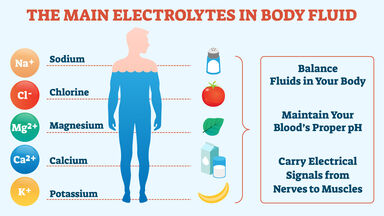
- Sodium is essential for good health in our bodies because it conducts electricity and is necessary for proper nerve function. It also maintains the fluid balance in the body.
- Egyptians made glass as early as 1370 BC by heating lime and soda, or calcium oxide and sodium carbonate. When the mixture cools, it forms hard, transparent glass.
(noun)An example of sodium is sodium chloride (salt) that improves the flavor of food and is used for salting or pickling to preserve food.