proton Hear it!

proton Definition

pro·ton (prōtän′)

noun

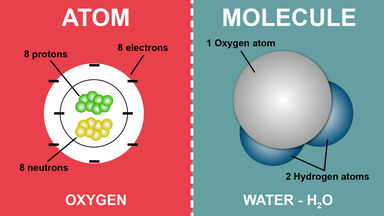
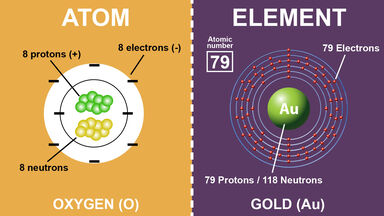
Particle Physics a nucleon carrying a positive charge equal to the negative charge of an electron and having a mass of c. 1.673 × 10kg (c. 938.2796 MeV/c, c. 1,836 times the mass of an electron): the number of protons in an atom determines the atomic number of a chemical element

Etymology: ModL < Gr prōton, neut. of prōtos, first: see proto-

proton Usage Examples

Converse of object

  • diffract: Finally, a first analysis of the leading proton spectrometer data where the diffracted proton is directly measured is presented in section 2.4.
  • collide: LHC will collide protons into protons at a center-of-mass energy of about 14 TeV.
  • accelerate: To accelerate protons to the highest observed energies on flare timescales, it is necessary to invoke anomalous resistivity in the MHD solution.
  • donate: The acid hydrogen chloride donates a proton to the base ammonia.
  • pump: These enzymes pump protons across the inner membrane, building up a proton gradient.
  • accept: The A - ion is a base because it is accepting a proton from the H 3 O + .

Adjective modifier

  • outgoing: So far we have only considered the case of small- t diffraction with respect to the outgoing proton.
  • energetic: Our findings are discussed with respect to previous works on the spectrum of energetic protons in the 10 MeV to GeV energy range.
  • leading: Dissociation of virtual photons in events with a leading proton at HERA.

Modifies a noun

  • inhibitor: Recommended doses of proton pump inhibitors are outlined in Table 1.
  • acceptor: A base is the opposite of an acid; it is a proton acceptor.
  • pump: Recommended doses of proton pump inhibitors are outlined in Table 1.
  • affinity: Below is a table of proton affinities for various gaseous components.
  • parton: We are investigating the determination of the uncertainty of the proton parton density functions.

Preposition: across

membrane: These enzymes pump protons across the inner membrane, building up a proton gradient.

Preposition: in

  • nucleus: Atomic number The number of protons in the nucleus of an atom.
  • atom: The number of protons in an atom gives the atom its atomic number.

Noun used with modifier

  • amide: FEBS Letters 277 ( 1-2 ) 185-188 ( 1990 ) Proline lacks an amide proton when found within proteins.
  • high-energy: The principle danger of the Van Allen belts is high-energy protons, which are not that difficult to shield against.