The nucleus is the center core of an atom that has a positive charge and that contains most of the atom's mass or the central heart of an organization or group. (noun)
An example of a nucleus is the center core of an atom.
An example of a nucleus is the fiction department of a book publisher where most of the money is made and which is considered the heart of the publisher's organization.
a thing or part forming the center around which other things or parts are grouped or collected; core
anything serving as a center of growth or development: the nucleus of a library
Anat. a group of nerve cells in the brain or spinal column
Astron. the bright central part of the head of a comet
Biol. the central, usually spherical or oval mass of protoplasm present in most plant and animal cells, containing most of the hereditary material and necessary to such functions as growth, reproduction, etc.
Bot. the central point in a starch grain
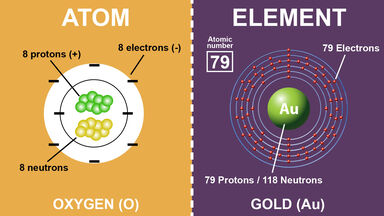
Chem., Physics the central part of an atom, the fundamental particles of which are the proton and neutron, except for hydrogen, which is usually composed of one proton only: it carries a positive charge and constitutes almost all of the mass of the atom
Phonet. the most sonorous portion of a syllable, usually a vowel
Organic Chem. a fundamental, stable arrangement of atoms that may occur in many compounds by atomic substitution without structural change, as the benzene ring
See nucleus in American Heritage Dictionary 4
(no͞oˈklē-əs, nyo͞oˈ-)
nounpl.nu·cle·i(-klē-īˌ) or nu·cle·us·es
A central or essential part around which other parts are gathered or grouped; a core: the nucleus of a city.
Something regarded as a basis for future development and growth; a kernel: a few paintings that formed the nucleus of a great art collection.
Biology A large, membrane-bound, usually spherical protoplasmic structure within a living cell, containing the cell's hereditary material and controlling its metabolism, growth, and reproduction.
Botany
a. The central kernel of a nut or seed.
b. The center of a starch granule.
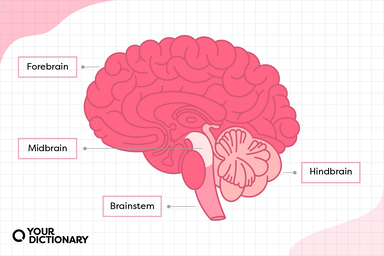
Anatomy A group of specialized nerve cells or a localized mass of gray matter in the brain or spinal cord.
Physics The positively charged central region of an atom, composed of protons and neutrons and containing almost all of the mass of the atom.
Chemistry A group of atoms bound in a structure, such as a benzene ring, that is resistant to alteration in chemical reactions.
Astronomy
a. The central portion of the head of a comet.
b. The central or brightest part of a nebula or galaxy.
Meteorology A particle on which water vapor molecules accumulate in free air to form a droplet or ice crystal.
Linguistics The part of a syllable having the greatest sonority. In the word middlemost (mĭdˈl-mōstˌ) the nuclei of the three syllables are (ĭ), (l), and (ō); in the Czech word krk (“neck”), the nucleus is (r).