croissant

(krə sänt; Fr krwȧ sän)

noun pl. croissants

a rich, flaky bread roll made in the shape of a crescent

Origin: Fr, lit., crescent: used in 19th c. to translate Ger hörnchen (lit., little horn); such rolls or cakes, shaped like the emblem of Turkey, were originated in Vienna to celebrate defeat of the Turks in 1689

See croissant in American Heritage Dictionary 4

noun
A rich, crescent-shaped roll of leavened dough or puff pastry.

Origin:

Origin: French

Origin: , from Old French creissant, croissant, crescent; see Crescent 

.

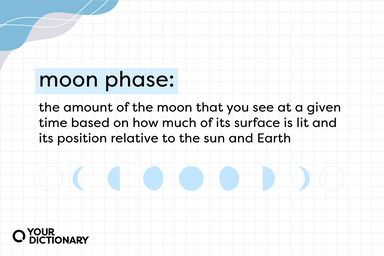
Word History: The words croissant and crescent illustrate double borrowings, each coming into English from a different form of the same French word. In Latin the word crēscere, “to grow,” when applied to the moon meant “to wax,” as in the phrase lūna crēscēns, “waxing moon.” Old French croissant, the equivalent of Latin crēscēns, came to mean “the time during which the moon waxes,” “the crescent-shaped figure of the moon in its first and last quarters,” and “a crescent-shaped object.” In Middle English, which adopted croissant in its Anglo-Norman form cressaunt, the first instance of our English word, recorded in a document dated 1399-1400, meant “a crescent-shaped ornament.” Crescent, the Modern English descendant of Middle English cressaunt, owes its second c to Latin crēscere. Croissant is not an English development but rather a borrowing of the Modern French descendant of Old French croissant. It is first recorded in English in 1899. French croissant was used to translate German Hörnchen, the name given by the Viennese to this pastry, which was first baked in 1689 to commemorate the raising of the siege of Vienna by the Turks, whose symbol was the crescent.

Learn more about croissant

link/cite print suggestion box