aviation

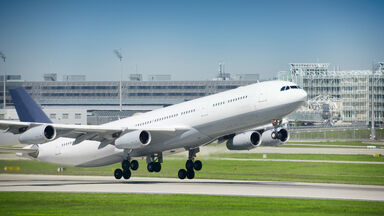
The definition of aviation means the science of developing and flying airplanes.

(noun)

Creating a blueprint for a new plane and flying an airplane are both examples of activities in the field of aviation.

YourDictionary definition and usage example. Copyright © 2013 by LoveToKnow Corp.

See aviation in Webster's New World College Dictionary

noun

  1. the art or science of flying airplanes
  2. the development and operation of heavier-than-air craft, including airplanes and piloted or guided rocket ships
  3. aircraft, esp. military aircraft, collectively

Origin: Fr < L avis, bird

See aviation in American Heritage Dictionary 4

noun
  1. The operation of aircraft.
  2. The design, development, and production of aircraft.
  3. Military aircraft.

Origin:

Origin: French

Origin: , from Latin avis, bird; see awi- in Indo-European roots

.

See aviation in Ologies

Aviation

accelerometer

an instrument for measuring and recording the rate of acceleration of an aircraft.

aerialist

a person who performs aerial acrobatics, as a trapeze artist, tightrope walker, stunt flier, etc.

aeroballistics

the science of ballistics combined with or from the special viewpoint of aerodynamics, particularly with regard to rockets, guided missiles, etc. —aeroballistic, adj.

aerobatics

stunts performed with aircraft. See also acrobatics.

aerocartography

the process of mapmaking by means of aerial survey.

aerodonetics

Rare. the science or art of gliding. —aerodonetic, adj.

aerodrome, airdrome

an airport or airbase, not including the personnel.

aerodromics

the art or science of flying airplanes.

aeroembolism

Medicine. a condition caused by the formation of nitrogen bubbles in the blood as a result of a sudden lowering of atmospheric pressure, as when flying at high altitude or rising too rapidly from a deep underwater dive.

aeromedicine

the medical specialty concerned with the health of those engaged in flying within the earth’s atmosphere.

aeronautics

1. Archaic. the science or art of ascending and traveling in the air in lighter-than-air vehicles.

2. the technology or art of flying airplanes. —aeronaut, n. — aeronautic, aeronautical, adj.

aeronautism

the technique of ballooning. —aeronautics, n.

aeropause

the region in the upper part of the earth’s atmosphere where the air is too thin for aircraft to operate properly.

aerophone

an instrument for detecting the approach of aircraft by intensifying the sound waves it creates in the air.

aerophysics

the branch of physics that studies the earth’s atmosphere, especially the effects upon the atmosphere of objects flying at high speeds or at high altitudes. —aerophysicist, n.

aeroplanist

an aviator or aircraft pilot.

aerostatics

the study of the construction and operation of aerostats, lighter-than-air craft, as balloons or dirigibles. —aerostatic, aerostatical, adj.

Avigation

the science of aerial navigation.

avinosis

airsickness.

avionics

the science and technology of electrical and electronic devices or equipment used in aviation.

ballooning

the art and science of operating balloons for sport or air travel. Also balloonry.

bioastronautics

the science that studies the effects of space travel on life, especially human life and the human body.

orthopter

da Vinci’s exploratory design for a flying machine moved by flapping wings.

perastadics

the science and art of space flying. — perastadic, adj.

photoreconnaisance

reconnaissance for purposes of aerial photography; reconnaissance or surveillance by means of aerial photography.

radar

an acronym for RAdio Detecting And Ranging: a method and the equipment used for the detection and determination of the velocity of a moving object by reflecting radio waves off it.

rocketry

the science and technology of rocket design and manufacture.

supersonic

applied to aircraft moving at speeds beyond the speed of sound, about 750 mph (1207.5 kph) at sea level.

volitation

flight, the act of flying, or the ability to fly.

Learn more about aviation

Related Articles

link/cite print suggestion box