Animals

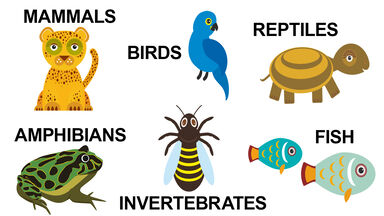
The definition of animals are members of the kingdom Animalia and are generally characterized by having a multicellular body, quick movement, specialized sense organs and the ability to get and digest food.

(noun)

Cats, dogs and elephants are each examples of animals.

YourDictionary definition and usage example. Copyright © 2013 by LoveToKnow Corp.

See Animals in Ologies

Animals

See also birds; bulls and bullfighting; cats; cocks; dogs; fish; horses; insects; reptiles; snakes; wolves; worms; zoology

acrodontism

the condition of having teeth without roots attached to the alveolar ridge of the jaws, as in certain animals. —acrodont, adj.

amensalism

a parasitic relationship between animals that has a destructive effect on one and no effect on the other. See also biology; plants.

Animalia

the realm of animals; the animal kingdom.

animality

1. the state of being an animal.

2. animal existence or nature in human activity; the animal in man as opposed to the spiritual.

anthropoglot

an animal with a tongue like that of man, as the parrot.

anthropoid

a creature resembling man, as an ape. —anthropoid, anthropoidal, adj.

anthropopathism, anthropopathy

the assignment of human feelings or passions to something not human, as a deity or an animal. —anthropopathic. adj.

artiodactyl

a hoofed animal having an even number of toes or digits on each foot, as pigs, sheep, deer, etc. —artiodactylous, adj.

bestiarian

1. an advocate of kindness to animals.

2. British. an antivivisectionist.

bestiarist

a compiler or writer of bestiaries.

bestiary

an allegorical or moralizing commentary based upon real or fabled animals, usually medieval and sometimes illustrated.

biodynamics

the study of the physiological processes of plants and animals. —biodynamic, biodynamical, adj.

bioecology

the branch of ecology that studies the interrelationship of plant and animal life in their common environment. —bioecologist, n. —bioecologic, bioecological, adj.

biostatics

the study of the relationship between structure and function in plants and animals. —biostatical, adj.

biota

the animal or plant life of a particular region.

brachiation

a method of movement, characteristic of certain animals, by swinging with the arms from one hold to another.

carcinology

the branch of zoology that studies crustaceans. —carcinologist, n. —carcinologic, carcinological, adj.

carnivore

a meat-eating animal. Cf. herbivore. —camivorous, adj.

commensalism

a relationship between animals or plants in which one lives with or on the other without damage to either. Cf. parasitism.

conatus

a vital force in plants or animals, similar to human effort. See also plants.

doraphobia

an intense fear of contact with animal fur or skin. —doraphobe, n.

echinology

the study of sea urchins. —echinologist, n.

epizoism

a nonparasitic relationship between animals in which one animal lives on the surface of the other.

epizootic

a disease affecting many animals at the same time; an epidemic amongst animals. —epizootic, adj.

epizootiology

the science concerned with the factors involved in the occurrence and spread of animal diseases. —epizootiologic, epizootiological, adj.

estrus, oestrus

the condition of being in rut or sexual arousal, applied particularly to the female. Also spelled estrum, oestrum. —estrous, oestrous, adj.

ethology

the study of animal behavior in relation to habitat. —ethologist, n. —ethological, adj.

extispicy

haruspicy. —extispex, n. —extispicious, Obsolete, adj.

fauna

1. the animal life of a particular time or region.

2. a study of or treatise on the animal life of a particular time or region. —faunal, adj.

faunist

a person who studies or writes on animal life; a naturalist.

faunology

zoogeography.

haruspication

haruspicy.

haruspicy

a form of divination by natural phenomena, especially from inspection of the entrails of animal sacrifices. Also called extispicy, haruspication. —haruspex, aruspex, n. —haruspical, adj.

helminthology

the study of worms, especially internal worms.

herbivore

a plant-eating animal. Cf. carnivore. —herbivorous, adj.

heterosis

abnormal development, especially increased size, in plants or animals, usually as a result of cross-breeding.

inquiline

an animal that inhabits the burrow, nest, or other habitation of another animal. —inquiline, adj.

lipotype

a particular type of animal life whose absence is a characteristic of a region. —lipotypic, adj.

locoism

a disease, chiefly of farm animals, characterized by paralysis and impaired vision and caused by eating locoweed.

manticore

a mythical or fabulous beast with the head of a man, the body of a lion or tiger, and the feet and tail of a dragon or scorpion. Also spelled mantichora.

morphology

the branch of biology that studies the structure and form of animals and plants. —morphologist, n. —morphologic, morphological, adj.

musomania

an abnormal love for mice.

musophobia

an abnormal fear of mice.

nealogy

the science of the early or youthful stage of animal development. — nealogic, adj.

oestrus

estrus.

organism

any animal or plant.

organography

the scientific description of the organs of plants and animals and of their structure and function. —organographist, n. —organographic, organographical, adj.

organology

the study of the organs of plants and animals. —organologist, n. —organologic, organological, adj.

ovipara

pl. animals that lay eggs. Cf. ovovivipara, vivipara. —oviparity, n. —oviparous, adj.

ovovivipara

pl. animals that lay eggs that are hatched in their bodies, so that young are born alive, without connection to a placenta.

parasitism

a relationship between animals in which one gains sustenance from the other. Cf. commensalism. See also biology; plants.

phylon

a group with genetic relationship. Cf. phylum.

phylum

any of the major subdivisions of the plant or animal kingdom. Cf. phylon. See also linguistics.

piggery

a place where pigs are kept; pigpen; pigsty.

predacean

a carnivorous animal. —predaceous, predacious, adj.

predation

a relation between organisms or animals in which one feeds on the other. —predatory, adj.

quadrat

a plot of land, square or rectangular, marked off or set out for the study of plant or animal life.

rabbitry

1. rabbits collectively.

2. a place where rabbits live or are kept.

relict

an animal or plant surviving in one area after becoming extinct else-where; a survival of an earlier period. — relict, adj.

rookery

a breeding or nesting place of rooks or of any gregarious bird or animal.

stirpiculture

selective breeding to develop strains with particular characteristics. —stirpicultural, adj.

sybotism

Rare. the business and art of raising swine.

taxidermy

the art of preparing, stuffing, and mounting the skins of animals so that they appear lifelike. —taxidermist, n.

terrarium

a container for keeping small animals.

theriomancy

a form of divination based upon observation of the movements of animals. Also called zoomancy.

theriomorphism

the worship of deities that are partly animal and partly human in form. Also called therianthropism, theriolatry. — theriomorphic, theriomorphous, adj.

thremmatology

the branch of biology that studies the breeding of domestic plants and animals.

ungulate

a mammal having hoofs, as the cow, horse, etc. —ungulate, adj.

vaccary

Obsolete. a cow house, shed, pasture, or other place where cows are kept. Also vachery.

virilescence

a condition of some animals, and especially of some fowls, in which the female, when old, assumes some of the characteristics of the male of the species. —virilescent, adj.

vivarium

an enclosed environment, as a glass container, in which plants or animals are raised under conditions that approximate their natural habitat. Also vivary.

vivary

a vivarium.

vivipara

pl. animals that bear living young. Cf. ovipara, ovovivipara. —viviparity, n. —viviparous, adj.

vulpicide

1. the killing of a fox by methods other than by hunting it with hounds.

2. the killer of a fox.

zoanthropy

a derangement in which a person believes himself to be an animal and acts accordingly. — zoanthropic, adj.

zoiatria

the science of veterinary surgery.

zoobiology

zoology.

zoogeography

the distribution of animal life by geographical location. —zoogeographer, n. —zoogeographic, zoogeographical, adj.

zoogony, zoogeny

1. the generation of animals.

2. a study of animal generation. —zoogonic, zoogenic, adj.

zoography

1. the branch of zoology concerned with animal description.

2. pictorial art in general, but especially that which shows animals. —zoographer, n. —zoographic, zoographical, adj.

zoolatry

the worship of animal gods. Cf. theriomorphism. Also called zootheism. —zoolater, n.

zoology

the branch of biology that studies and classifles all living creatures. —zoologist, n. —zoological, adj.

zoomancy

a form of divination based upon the observation of animals or their movements under certain circumstances. Also called theriomancy.

zoomania

an abnormal love of animals.

zoometry

the measurement and comparison of the sizes of animals and their parts.

zoomorphism

the attribution of animal form or nature, especially to a deity. —zoomorphic, adj.

zoonomia

zoonomy.

zoonomy, zoonomia

the laws of animal life or the animal kingdom. —zoonomist, n. —zoonomic, adj.

zoopathology

the study or science of the diseases of animals; animal pathology. Also zoopathy.

zoopathy

zoopathology.

zoopery

the performing of experiments on animals, especially the lower animals. —zooperal, adj.

zoophilia

a love of animals. —zoophile, n.

zoophilism, zoophily

love of animals. —zoophilist, n. —zoophilous, adj.

zoophobia

an abnormal dread of animals. —zoophobe, n.

zoophysics

the study of animal physiology and form. —zoophysical, adj.

zoophysiology

the physiology of animals, as distinct from that of humans.

zoophyte

an animal, as a sponge, coral, etc, that resembles a plant more than an animal; any of the Zoophyta. —zoophytic, zoophytical, zoophytoid, adj.

zoophytology

the branch of zoology concerned with the zoophytes. —zoophytological, adj.

zooplasty

the process of surgically grafting tissue from a lower animal onto the human body. —zooplastic, adj.

zoopsia

a form of hallucination in which the sufferer imagines he sees animals. Also zooscopy.

zoopsychology

a branch of psychology that studies animal behavior.

zooscopy

zoopsia.

zootaxy

zoological classification; the scientific classification of animals.

zootechny

the principles of animal husbandry. Also spelled zootechnics. —zootechnician, n. —zootechnical, adj.

zootheism

the worship of animal gods; zoolatry. —zootheist, n.

zootomy

1. the dissection of animals other than man.

2. the anatomy of animals. —zootomist, n. —zootomic, zootomical, adj.

Learn more about Animals

Related Articles

link/cite print suggestion box