Silicon Definition
sĭlĭ-kən, -kŏn
noun
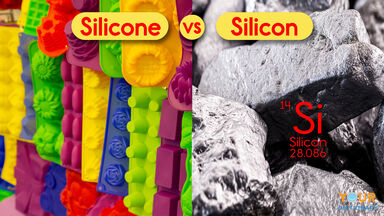
A nonmetallic chemical element occurring in several forms, found always in combination, and more abundant in nature than any other element except oxygen, with which it combines to form silica: used in the manufacture of transistors, solar cells, rectifiers, silicones, ceramics, etc.: symbol, Si; at. no. 14
Webster's New World
(slang) Computing.
Wiktionary
(slang) Computer processor.
Wiktionary
Abbreviation of silicon chip.
Wiktionary
Synonyms:
- atomic number 14
- si

Find Similar Words
Find similar words to silicon using the buttons below.