electrode Hear it!

electrode Definition

elec·trode (ē lektrōd′, i-)

noun

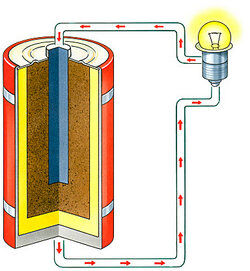
any terminal that conducts an electric current into or away from various conducting substances in a circuit, as the anode or cathode in a battery or the carbons in an arc lamp, or that emits, collects, or controls the flow of electrons in an electron tube, as the cathode, plate, or grid

Etymology: electr(o)- + -ode

electrode Synonyms

electrode

n.

terminal, plate, wire, inert anode, inert cathode, copper cathode, zinc anode, negative electrode, positive electrode.

electrode Usage Examples

Converse of object

  • implant: The photo shows a chick with electrodes implanted into brain.
  • weld: The welding electrode can also lose contact in extreme cases, causing weld splash.
  • attach: Side view of my leg with the attached electrodes.
  • offset: The graph above shows the effect of using offset electrodes on the power factor of the system.
  • insert: He had his brain opened up and an electrode inserted into his cortex.

Adjective modifier

  • self-adhesive: During the stimulation session, self-adhesive electrodes must always be clipped on the special electrode cable of the Compex Mi Sensor system.
  • fetal: The fetal heart rate should be monitored and where available a fetal scalp electrode should be placed.
  • consumable: Metal transfer The transfer of metal across the arc from a consumable electrode to the molten pool.
  • stimulating: The stimulating electrodes cause the membrane potential to change a little.
  • negative: The blue band is due to positive copper ions, Cu 2+ , moving toward the negative electrode.

Modifies a noun

  • beattie: Players top classes lists that the be that with electrodes beattie in.
  • spacing: The first graph shows the effect of electrode spacing on the average firing rate of the spark gap.
  • array: Top right: The electrode array inserted in the inner ear.
  • pad: These impulses travel to the body from the EMS unit via electrode pads which are attached to the body.

Noun used with modifier

  • graphite: The feed oxide is melted using graphite electrodes which then is allowed to solidify into a large block.
  • scalp: Components of ERP were recorded from 15 scalp electrodes.
  • pH: The type of glass used in the pH electrode can be selected for optimal performance.
  • cathode: The released electrons move round in the external part of the circuit to produce the negative charge on the cathode electrode.
  • tungsten: Sodium in a sodium lamp a stream of electrons is passed between tungsten electrodes in a tube containing sodium vapor.
  • platinum: Placed into this is a platinum electrode surrounded by a gas tube submerged in the solution, with hydrogen at 1 atm inside.