shofar
shofar definition
sho·far (s̸hō′fər, -fär′; Heb s̸hō̂ fär′)
Webster's New World College Dictionary Copyright © 2009 by Wiley Publishing, Inc., Cleveland, Ohio.
Used by arrangement with John Wiley & Sons, Inc.
Browse dictionary definitions near shofar
Share on Facebook
The shofar is the most-mentioned instrument in the bible (72 times). It held a special reli¬gious and secular role in the life of the Jewish people. Only priests and Levites were allowed to perform the religious function of blowing the shofar in the Jewish commonwealth.
The shofar had several religious roles recorded in the tanakh (the bible), such as the transfer of the ark of the covenant (2 Samuel 6:15; 1 chronicles 15:28); the announcement of the new moon (psalms 81:4); the beginning of the religious new year (numbers 29:1); the day of atonement (Leviticus 25:9); the procession preparatory to the feast of tabernacles (Mishnah, Hullin 1:7); the libation ceremony (Mishnah, ROSH HASHANAH 4:9); and the havdalah ceremony marking the end of a festival (Mishnah, Hullin 1:7).
Throughout the day, Abraham saw the ram become entangled in a tree, break loose and go free. Then, become entangled in a shrub, break loose and go free. Then again, becoming entangled in a thicket breaks loose and goes free. The holy one who is blessed said: “so shall your children become entangled in many kinds of sons and trapped in many kingdoms. But in the end, they will be redeemed by the sound of the shofar. Sefer Haggadah 3:45.
In addition, the shofar had a number of secular roles, such as coronating a king (2 Samuel 5:10; 1
Kings 1:34; 2 Kings 1:13) and signaling in times of war to assemble troops, to attack, to pursue, and to proclaim victory (Numbers 10:9; Judges 6:4; Jeremiah 4:5 and Ezekiel 33:3-6).
In post-biblical times, the sho¬far was enhanced in its religious use because of the ban on play¬ing musical instruments as a sign of mourning for the destruction of the temple. (It is noted that a full orchestra played in the temple, includ¬ing, perhaps, a primitive organ.) The shofar continues to announce the New Year and the new moon, to introduce the Sabbath, and to carry out the commandments on Rosh Hashanah and Yom Kippur. The secular uses have been dis¬carded (although the shofar was sounded to commemorate the reunification of Jerusalem in 1967) (Judith Kaplan Eisendrath, Heritage of Music, New York: UAHC, 1972, pp. 44-45).
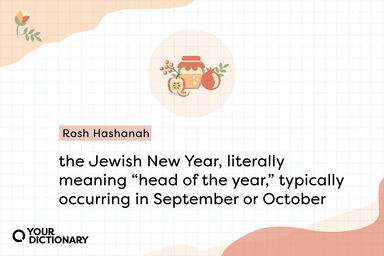
The shofar is primarily associated with Rosh ha-Shanah. Indeed, Rosh Hashanah is called "Yom T’ruah" (the day of the shofar blast). In the Mishnah (book of early rabbinic laws derived from the torah), a discussion centers on the centrality of the sho¬far in the time before the destruction of the second temple (70 C.E.). Indeed, the shofar was the center of the cer¬emony, with two silver trumpets playing a lesser role. On other solemn holidays, fasts, and new moon celebrations, two silver trumpets were featured, with one shofar playing a lesser role. The shofar is also associated with the jubilee year in which, every fifty years, Jewish law provided for the release of all slaves, land, and debts. The sound of the sho¬far on Rosh ha-Shanah announced the jubilee year, and the sound of the shofar on Yom Kippur proclaimed the actual release of finan¬cial encumbrances.
http:/ / shofar221.com
Posted by art finkle 65 days ago.