Sanskrit Definition
sănskrĭt
noun
The classical Old Indic literary language, as cultivated from the 4th cent. b.c. onward: because of the antiquity of its written expression and the detailed descriptive analysis it received in the Sutras of the Hindu grammarian Pānini (end of the 4th cent. b.c.), Sanskrit was used as a major source of data in the origin and development of Indo-European comparative linguistics.
Webster's New World
Any written form of Old Indic, including Vedic.
Webster's New World
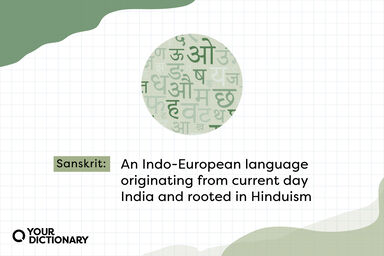
An ancient Indic language that is the language of Hinduism and the Vedas and is the classical literary language of India.
American Heritage
Synonyms:
- Sanskritic language
adjective
Of or written in Sanskrit.
Webster's New World
pronoun
A classical language of India ("Indian Latin"), a liturgical language of Hinduism, Buddhism, Sikhism, Jainism, and one of the 23 official languages of India. Member of Indo-Iranian and thus Indo-European language family.
Wiktionary
Origin of Sanskrit
-
Sanskrit saṃskṛtam from neuter of saṃskṛta- perfected, refined sam together sem-1 in Indo-European roots karoti he makes kwer- in Indo-European roots
From American Heritage Dictionary of the English Language, 5th Edition
From Sanskrit संस्कृत (saṃ-ská¹›tá, “perfected, prepared, constructed, refined").
From Wiktionary
Related Articles




Sanskrit Is Also Mentioned In
Find Similar Words
Find similar words to Sanskrit using the buttons below.