Cyprus

(prəs)

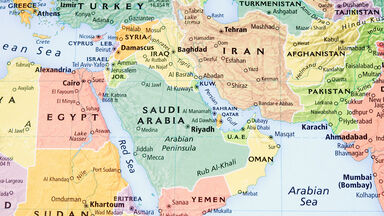
country on an island at the E end of the Mediterranean, south of Turkey: colonized by Phoenicians and ancient Greeks; at various times ruled by Persian, Roman, Ptolemaic, Byzantine, & Ottoman Empires: formerly a British territory, it became independent in 1960 & a member of the Commonwealth in 1961: 3,572 sq mi (9,251 sq km); pop. 714,000; cap. Nicosia

See Cyprus in American Heritage Dictionary 4

Cy·prus

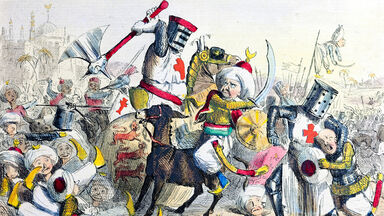
An island country in the eastern Mediterranean Sea south of Turkey. Site of an ancient Neolithic culture, the island was settled by Phoenicians c. 800 B.C. and thereafter fell successively to the Assyrians, Egyptians, Persians, Macedonian Greeks, Egyptians again, and finally Romans (58 B.C.). The Byzantines controlled it from A.D. 395 until 1191, when it was captured by Richard I of England during the Third Crusade. Venice annexed it in 1489, Turkey conquered it in 1571, and Great Britain proclaimed its sovereignty in 1914. Cyprus became independent in 1960, but large-scale fighting between Greek and Turkish Cypriots led to the installment of a UN peacekeeping force in 1965. In 1974 Turkey invaded Cyprus and established a separate Turkish state in the northern part. Nicosia is the capital and the largest city. Population: 788,000.

(click for a larger image)

Cyprus

Learn more about Cyprus

Cyprus

link/cite print suggestion box