armistice Hear it!

armistice Definition

ar·mi·stice (ärmə stis)

noun

a temporary stopping of warfare by mutual agreement, as a truce preliminary to the signing of a peace treaty

Etymology: Fr < L arma, arms (see arm) + -stitium (as in solstitium, solstice) < sistere, to cause to stand, redupl. < stare, stand

armistice Synonyms

armistice

n.

truce, cease-fire, temporary peace; see truce.

armistice Usage Examples

Converse of object

  • conclude: Sherman concluded an armistice with General Joseph E. Johnston on 21st April.
  • sign: On the 30th October the Turks signed an Armistice.
  • seek: They seek no armistice; they have no territory to defend; they have no public to answer to, " Rumsfeld said.
  • follow: Their coalition was re-elected by a landslide following the Armistice.
  • agree: The decision of military men to agree an armistice with Germany was ideological to the core.
  • negotiate: However, unable to persuade representatives from the warring nations to take part, the conference was unable to negotiate an Armistice.

Adjective modifier

  • Italian: On 9 th September 1943 the Italian Armistice was signed, the POWs were handed over to the German Army.
  • unofficial: Militarily, this unofficial armistice on the Aragon front only benefitted the enemy.
  • mutual: We had a kind of mutual armistice with the Germans in the trenches in front of us.
  • immediate: The state of the army made it imperative for army headquarters to use every means to secure an immediate armistice.

Modifies a noun

  • agreement: The US was forced to sign an armistice agreement on July 27, 1953.
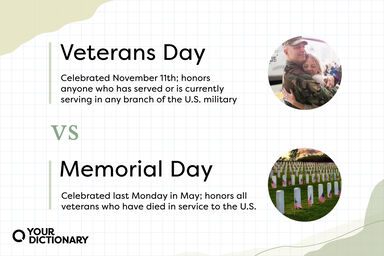
  • day: Armistice Day is abridged from an article in Peace News, 7 November 1936.
  • condition: With respect to the Hungarian forces, the Hungarian Government was not carrying out the preliminary armistice conditions accepted several days ago.
  • term: The armistice terms were also more moderate than the French were expecting.
  • silence: The Legion renewed their call for an armistice day silence, this year falling on a Monday.

Preposition: in

carriage: The defeated French were made to sign the armistice in the same railroad carriage as the used by the defeated Germans in 1918.

Preposition: from

position: Four of these graves were brought in after the Armistice from isolated positions in the commune.

Preposition: by

concentration: The Cemetery was greatly enlarged after the Armistice by the concentration of over 700 graves from the Battlefields between the Somme and the Luce.