Amphibian Definition
ăm-fĭbē-ən
amphibians
noun
amphibians
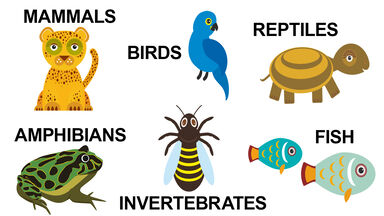
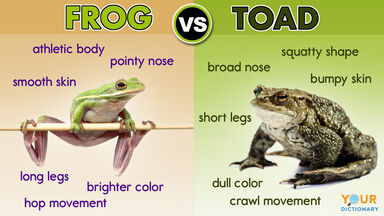
Any of a class (Amphibia) of coldblooded, scaleless vertebrates, consisting of frogs, toads, newts, salamanders, and caecilians, that usually begin life in the water as tadpoles with gills and later develop lungs.
Webster's New World
An animal capable of living both on land and in water.
American Heritage
Any amphibious animal or plant.
Webster's New World
An aircraft that can take off and land on either land or water.
American Heritage
Any aircraft that can take off from and come down on either land or water.
Webster's New World
Synonyms:
- amphibious vehicle
- amphibious aircraft
- monocot
- hoptoad
- floatplane
- waterplane
- sporophyte
- dicot
- reptilia
- gametophyte
- salamander
- proteus
- caecilian
- newt
- frog
adjective
Of amphibians.
Webster's New World
Webster's New World
Pertaining to the Amphibia.
Wiktionary
Of or relating to the amphibians Amphibia.
Wiktionary
Capable of operating on both land and water amphibious.
Wiktionary
Synonyms:
Other Word Forms of Amphibian
Noun
Singular:
amphibianPlural:
amphibia, amphibiansOrigin of Amphibian
-
From New Latin Amphibia class name from Greek neuter pl. of amphibios amphibious amphi- amphi- bios life gwei- in Indo-European roots
From American Heritage Dictionary of the English Language, 5th Edition
From Ancient Greek ἀμφίβιον (amphibion), from ἀμφί (amphi, “of both kinds”) + βίος (bios, “life”)
From Wiktionary




Find Similar Words
Find similar words to amphibian using the buttons below.