taxonomy

Taxonomy is the science of classification of plants and animals.

Facts About Taxonomy

  • The word taxonomy is derived from two Greek words - taxis, which means order or arrangement, and nomos, which means law or science.
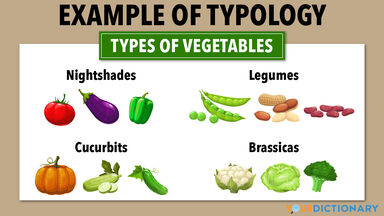
  • Taxonomy is normally shown or illustrated in a taxonomy tree that breaks down classifications and sub-classifications about a particular subject in a tree diagram.
  • The field of taxonomy largely began with "alpha taxonomy," which is used to classify species and subspecies of plants and animals.
  • Taxonomy has expanded over the years to include the classification of both animate and inanimate objects.
  • In recent years, the concept of taxonomy has been used for the organization of subject matter in libraries and other information fields.
(noun)

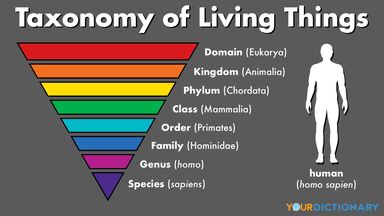
  1. An example of taxonomy is the way living beings are divided up into Kingdom, Phylum, Class, Order, Family, Genus, Species.
  2. An example of taxonomy is the Dewey Decimal system - the way libraries classify non-fiction books by division and subdivisions. The number assigned, combined with the first three letters of the author's last name, become the call number used for deciding the order of arrangment of books on the library shelf.
  3. An example of taxonomy is the way a website classifies and organizes available resources and information to help navigation within a website.

YourDictionary definition and usage example. Copyright © 2013 by LoveToKnow Corp.

See taxonomy in Webster's New World College Dictionary

noun pl. taxonomies

  1. the science of classification; laws and principles covering the classifying of objects
  2. Biol. a system of arranging animals and plants into natural, related groups based on some factor common to each, as structure, embryology, or biochemistry: the basic taxa now in use are, in descending order from most inclusive, kingdom, phylum (in botany, division), class, order, family, genus, and species

Origin: Fr taxonomie < Gr taxis (see taxis) + nomos, law (see -nomy)

Related Forms:

See taxonomy in American Heritage Dictionary 4

noun pl. tax·on·o·mies
  1. The classification of organisms in an ordered system that indicates natural relationships.
  2. The science, laws, or principles of classification; systematics.
  3. Division into ordered groups or categories: “Scholars have been laboring to develop a taxonomy of young killers” (Aric Press).

Origin:

Origin: French taxonomie

Origin: : Greek taxis, arrangement; see taxis 

Origin: + -nomie, method (from Greek -nomiā; see -nomy)

.

Related Forms:

  • tax·onˈo·mist noun

Taxonomy of Life

The taxonomic organization of species is hierarchical. Each species belongs to a genus, each genus belongs to a family, and so on through order, class, phylum, and kingdom. Associations within the hierarchy reflect evolutionary relationships, which are deduced typically from morphological and physiological similarities between species. So, for example, species in the same genus are more closely related and more alike than species that are in different genera within the same family. Carolus Linnaeus, an 18th-century Swedish botanist, devised the system of binomial nomenclature used for naming species. In this system, each species is given a two-part Latin name, formed by appending a specific epithet to the genus name. By convention, the genus name is capitalized, and both the genus name and specific epithet are italicized, for Canis familiaris or simply C. familiaris. Modern taxonomy is currently in flux, and certain aspects of classification are being refined. This table shows one traditional classification of five species of life out of the estimated five million species of the world.

Common NameKingdomPhylum*ClassOrderFamilyGenusSpecies
Domesticated
Dog
Animalia
(animals)
ChordataMammaliaCarnivoraCanidaeCanisC. familiaris
Sugar MaplePlantae
(plants)
MagnoliophytaRosidaeSapindalesAceraceaeAcerA. saccharum
Bread MoldFungi
(fungi)
ZygomycotaZygomycetesMucoralisMucoraceaeRhizopusR. stolonifer
Tuberculosis
Bacterium
Prokaryotae
(bacteria)
FirmicutesActinobacteriaActinomycetalesMycobacteriaceaeMycobacteriumM. tuberculosis
Pond AlgaProtista
(algae,
diatoms)
ChlorophytaEuconjugataeZygnematalisZygnemataceaeSpirogyraS. crassa

* In botanical nomenclature, "division" is used instead of "phylum."

Copyright © 2000 by Houghton Mifflin Company

Learn more about taxonomy

Related Articles

taxonomy

link/cite print suggestion box