randomize Hear it!

randomize Definition

ran·dom·ize (-īz′)

transitive verb -·ized′, -·iz′·ing

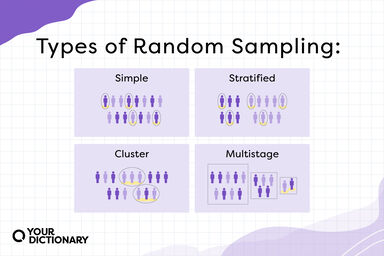
to select or choose (items of a group) in a random order to obtain an unbiased result, often by using a table of random numbers

randomize Related Forms

ran′·domi·za·tion noun

randomize Usage Examples

Object

  • trial: Double blind, randomized clinical trials in surgical patients were required.
  • placebo: Design: Prospective, randomized placebo controlled double-blind study.
  • alignment: The score of each randomized alignment is reported to the screen.
  • algorithm: We describe efficient randomized algorithms whose probability of error can be controlled by the user.
  • comparison: A six-week, multicenter, randomized, double-blind comparison.
  • phase: Patients who did not respond to the randomized phase of ECT were treated in an open, crossover phase using moderate dose bilateral ECT.

Preposition: for

subject: The assignment of the 40 experimental texts to the four conditions was randomized for each subject.

Infinitive complement

  • receive: Patients are being randomized to receive either active derivatives of cannabis, or a placebo.
  • continue: At 6 months, responders were randomized to continue beta-carotene or placebo therapy for 12 additional months.

Adjective complement

  • controlled: Design: Single blind, randomized controlled, repeated measures, trial.
  • double-blind: A randomized double-blind, placebo-controlled trial of triazolam was carried out in a major cancer center in women undergoing initial breast cancer surgery.

Modifying Another Word

  • completely: The experimental design was a completely randomized type with ten replicates ( pots ).
  • no: Actually, no randomized performed trial showed the superiority of high dose chemotherapy in first line or in salvage treatment.
  • only: Only randomized controlled trials of LLLT for the treatment of patients with a clinical diagnosis of RA or OA were eligible.
  • possibly: C C2-SPECTR - FREE registry of over 10,000 randomized and possibly randomized trials in education, social work and welfare, and criminal justice.
  • not: I was testing the wrong hypothesis, the numbers were too small, and they were not randomized.
  • then: These words were then randomized and played to adult listeners to identify.