Exorcise Definition
ĕksôr-sīz, -sər-
exorcised, exorcises, exorcising, exorcized, exorcizing
verb
exorcised, exorcises, exorcising, exorcized, exorcizing
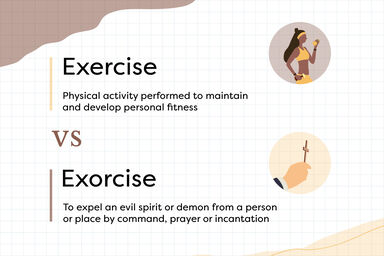
To drive (an evil spirit or spirits) out or away by ritual prayers, incantations, etc.
Webster's New World
To adjure (such a spirit or spirits)
Webster's New World
To eliminate or suppress (a malign influence or negative feeling, for example).
American Heritage
To free from such a spirit or spirits.
Webster's New World
Synonyms:
Origin of Exorcise
-
Middle English exorcisen from Late Latin exorcizāre from Greek exorkizein ex- out of exo– horkizein to make one swear (from horkos oath)
From American Heritage Dictionary of the English Language, 5th Edition
-
From Old French exorciser, from Late Latin exorcizāre, from Ancient Greek ἐξορκίζειν (eksorkizein, “banish an evil spirit; bind by oath”).
From Wiktionary

Find Similar Words
Find similar words to exorcise using the buttons below.