Antimony Definition
ăntə-mōnē
noun
A metallic element having two allotropic forms: a hard, extremely brittle, lustrous, bluish-white, crystalline material and a gray amorphous form. It is used in a wide variety of alloys, especially with lead in battery plates, and in the manufacture of flame-proofing compounds, paint, semiconductor devices, and ceramic products. Atomic number 51; atomic weight 121.76; melting point 630.63°C; boiling point 1,587°C; specific gravity 6.68; valence 3, 5.
American Heritage
A silvery-white, brittle, nonmetallic chemical element of crystalline structure, found only in combination: used in alloys with metals to harden them and increase their resistance to chemical action; compounds of antimony are used in medicines, pigments, and matches, and for fireproofing: symbol, Sb; at. no. 51
Webster's New World
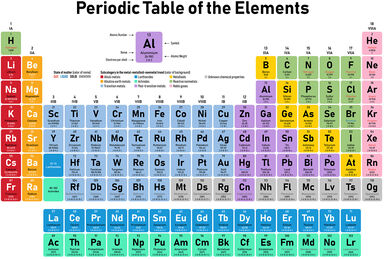
A chemical element (symbol Sb) with an atomic number of 51. The symbol is derived from Latin stibium.
Wiktionary
The alloy stibnite.
Wiktionary
Synonyms:
- atomic number 51
- sb
Origin of Antimony
-
Middle English antimonie from Medieval Latin antimōnium perhaps from Arabic al-’iṯmid al- the ’iṯmid antimony (perhaps from Greek stimmi stibine)
From American Heritage Dictionary of the English Language, 5th Edition
-
From Medieval Latin antimonium attested in the eleventh century; see also here.
From Wiktionary

Antimony Is Also Mentioned In
Find Similar Words
Find similar words to antimony using the buttons below.