Italy

(it'l ē)

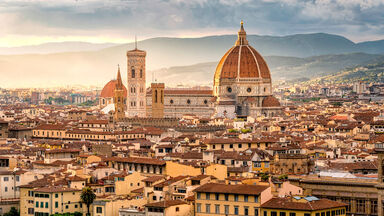
country in S Europe, mostly on a peninsula extending into the Mediterranean & including Sicily, Sardinia, and numerous other islands: formerly a kingdom created by the unification of various Italian monarchies & states (1861), it became a republic in 1946: 116,333 sq mi (301,301 sq km); pop. 56,778,000; cap. Rome: It. name Italia

Origin: L Italia, altered, prob. by Greeks living in S Italy < earlier (prob. Oscan) Víteliú; orig. used only of the SW point of the peninsula

See Italy in American Heritage Dictionary 4

  1. A peninsula of southern Europe projecting into the Mediterranean Sea between the Tyrrhenian and Adriatic seas.
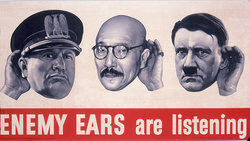
  2. A country of southern Europe comprising the peninsula of Italy, Sardinia, Sicily, and several smaller islands. It was settled in antiquity by Italic tribes, Etruscans, and Greek colonists. The non-Roman peoples were gradually supplanted as the power of Rome grew from the fourth century B.C. After the fall of the Roman Empire (A.D. 476), Italy was ruled by various barbarian tribes, local families, and popes. Nationalism in the 19th century led to unification under King Victor Emmanuel II in 1870. Italy became a fascist state under Benito Mussolini, whose regime (1922-1943) was allied with Germany in World War II. After surrendering to the Allies in 1943, Italy was reconstituted as a republic in 1946. Rome is the capital and the largest city. Population: 58,100,000.

(click for a larger image)

Italy

See Italy in Ologies

Italy

cinquecentism

the revival in arts and letters in the sixteenth century in Italy. —cinquecentist, n., adj.

duecentism

the art and literature of thirteenth-century Italy. — duecentist, n., adj.

Italomania

an obsession with Italy and things Italian.

quattrocentism

the art of fifteenth-century Italy. — quattrocentist, n., adj.

Quirinal

the civil government of Italy, as contrasted with the papal government of the Vatican. —Quirinal, adj.

Learn more about Italy

Related Articles

Italy

link/cite print suggestion box