humor

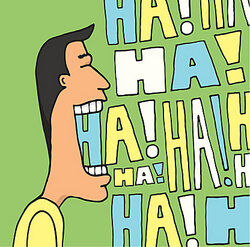
The definition of humor is the quality of being funny, or something that makes people laugh, or one of the four bodily fluids.

(noun)

  1. An example of humor is the talent of a comedian to make their audience laugh.
  2. An example of humor is a funny joke in a greeting card.
  3. An example of humor is blood.

Humor means to agree with the wishes or ideas of someone else just to make them feel better.

(verb)

An example of humor is lying to someone by telling them the meal they cooked for you was the best you've ever eaten.

YourDictionary definition and usage example. Copyright © 2013 by LoveToKnow Corp.

See humor in Webster's New World College Dictionary

noun

  1. any fluid or juice of an animal or plant; esp., any of the four fluids () formerly considered responsible for one's health and disposition; blood, phlegm, choler, or melancholy
    1. a person's disposition or temperament
    2. a mood; state of mind
  2. whim; fancy; caprice
  3. the quality that makes something seem funny, amusing, or ludicrous; comicality
    1. the ability to perceive, appreciate, or express what is funny, amusing, or ludicrous
    2. the expression of this in speech, writing, or action
  4. any fluid or fluidlike substance of the body; blood, lymph, bile, etc.: the aqueous humor

Origin: ME < OFr < L humor, umor, moisture, fluid, akin to umere, to be moist < IE base *wegw-, *ugw-, moist, moisten, wake, Gr hygros, moist, fluid, Du wak, wet

transitive verb

  1. to comply with the mood or whim of (another); indulge
  2. to act in agreement with the nature of; adapt oneself to

Related Forms:

See humor in American Heritage Dictionary 4

noun
  1. The quality that makes something laughable or amusing; funniness: could not see the humor of the situation.
  2. That which is intended to induce laughter or amusement: a writer skilled at crafting humor.
  3. The ability to perceive, enjoy, or express what is amusing, comical, incongruous, or absurd. See Synonyms at wit1.
  4. One of the four fluids of the body, blood, phlegm, choler, and black bile, whose relative proportions were thought in ancient and medieval physiology to determine a person's disposition and general health.
  5. Physiology
    a. A body fluid, such as blood, lymph, or bile.
    b. Aqueous humor.
    c. Vitreous humor.
  6. A person's characteristic disposition or temperament: a boy of sullen humor.
  7. An often temporary state of mind; a mood: I'm in no humor to argue.
  8. a. A sudden, unanticipated whim. See Synonyms at mood1.
    b. Capricious or peculiar behavior.
transitive verb hu·mored, hu·mor·ing, hu·mors
  1. To comply with the wishes or ideas of; indulge.
  2. To adapt or accommodate oneself to. See Synonyms at pamper.

Origin:

Origin: Middle English, fluid

Origin: , from Old French umor

Origin: , from Latin ūmor, hūmor

.

See humor in Ologies

Humor

See also laughter; punning

Atticism

a concise witticism or well-turned phrase. —Atticist, n.

buffoonism

1. a tendency to amuse others by tricks, jokes, unusual gestures, and strange gestures.

2. a tendency toward coarse joking. Also buffoonery. —buffoon, n. —buffoonish, adj.

facetiae

1. amusing or witty writings and remarks.

2. coarsely witty stories or books. —facetious, adj.

jocosity

1. the habit of joking or jesting.

2. a joke or a jest.

3. the state or quality of humorousness or playfulness. —jocose, adj.

mordancy, mordacity

the condition or quality of being biting or caustic, as humor, speech, etc. See also speech. —mordant, adj.

nugae

trifles or trivia, especially light verses or sayings.

Pantagruelism

the habit of dealing with serious matters in a spirit of good and sometimes cynical good humor. [Allusion to Rabelais’ satirical novels Gargantua (1534) and Pantagruel (1532), especially to the behavior of Pantagruel, Gargantua’s huge son.] —Pantagruelian, adj.

pianologue

a humorous performance at the piano, sometimes with a verbal accompaniment by the performer.

Rabelaisian

1. a person who imitates or is an enthusiast for the works of Francois Rabelais.

2. a person given to coarse, satirical humor, like that of Rabelais. —Rabelaisian, adj.

Rabelaism

the personality or character of Rabelais, as in the use of coarse, satirical humor. Also Rabelaisianism.

reparteeist

a person skilled in the exchange of witticisms.

ribaldry

coarse, vulgar, or obscene language or joking. —ribald, adj.

satirist

1. a writer of satire.

2. a person who uses satire or makes satirical comments.

Learn more about humor

Related Articles

link/cite print suggestion box